The title is misleading. I am not going to list the 170-some books on my goodreads TBR pile. That would be a long and tedious post. Instead I am going to list the main books on this year’s to-read pile. I set my goodreads goal at 30 books (look, I’m in revisions and I have a one-year-old…I had to be reasonable). And, miraculously, I am on track.
So far I have read:
The Golem and the Jinni: My thoughts on it are mentioned inthis post, although I will say that my five star rating quickly cooled to a four star, almost to a 3.5. Still a good book though.
Throne of the Crescent Moon: Some really good aspects (MIDDLE-EASTERN SETTING!!!! An atypical main character) but I ended up…*whispers* skimming quite a lot. The plot just didn’t interest me.
The Napoleon of Notting Hill: Odd. Interesting. Try it for yourself.
‘Ijaam: Iraqi novella about a man in prison in Saddam’s Iraq.
So that just leaves 26 more books. I am currently reading N.K. Jemisin’s The Fifth Season, Lew Wallace’s Ben Hur, and Blaise Pascal’s Pensees.
That brings us to 23.
Fantasy TBRs:
1-3. Brandon Sanderson’s Mistborn Trilogy. I have heard good things about it and, lo, it sits on my shelf untouched.
4. Ken Liu’s Grace of Kings.
5. Rachel Hartman’s Shadowscale. I don’t normally go for dragons, but I really liked book 1 of this duology
6-8. Ursula Le Guin’s Earthsea Trilogy. For shame that I have not yet read it.
Sci-Fi:
9. Starship Troopers, Robert Heinlein. Considered a classic also, another which I have sitting on my shelf long in wait.
And…that is all the Sci-fi I have right now. I may need to remedy that.
Other Fiction:
10. Rose Under Fire: (WWII historical fiction set in Ravensbruck), by Elizabeth Wein
11. Old Men at Midnight, by Chaim Potok
12. The Father Brown Omnibus, by G.K. Chesterton
13. Welcome to the Monkey House, by Kurt Vonnegut
14. My Antonia, by Willa Cather
15. Miramar, Naguib Mahfouz
16. The Slave, by Isaac Bashevis Singer
Non-Fiction:
17. Subjects of the Sultan (Ottoman history) by Suraiyah Faroqhi
18. The Blood of Lambs, by Kamal Saleem (written by former PLO)
19. They Stand Together: the Letters of C.S. Lewis to Arthur Greeves
20. Fool’s Talk, by Os Guinness
21. Iraq’s Last Jews: Stories of Daily Life, Upheaval, and Escape from Modern Babylon
22. Saddam’s Secrets, by George Sada
23. The Ugly American, by William J. Lederer and Eugene Burdick
Will I actually get through all of these? I hope so. I’ve been longing to read some of these and am very excited to get to it!
I have a conundrum when it comes to emotions in writing. I am, in fact, a very emotional person. Further fact: I HATE admitting this, and I used to loathe it when (as a child) anyone one of my family members would point out how emotional I was, and then I would get emotional about that. Usually angry.
I am not entirely sure WHY, but early on in my childhood I got it into my head that emotions were silly, and I was in fact a tough, stoic, uncrying sort of person.
Now that I’m all grown and (mostly) over that, and (more) accepting of my emotional side, I don’t try to pretend to be serious and stoic about things.
HOWEVER, some of this self-created stigma still lingers in my writing. I feel embarrassed for my characters if they get too emotional, too romantic, too anything. (Except angry, anger I don’t mind) And this isn’t a good thing. It’s playing to that same old stigma that having emotions is a BAD thing. Which it isn’t.
Now, letting your emotions wreak havoc and rule your life and destroy you because you can’t be bothered to deal with them or control them or whatever? That’s different, and a whole different discussion anyway.
Getting in the Mood
Anyhow, whenever I am writing a scene I do what I suspect most writers do, and I sit there and empathize my way, as best I can, into the emotional state of a given character. This frequently results in my husband suddenly stopping whatever he’s doing and looking at me.
“What’s wrong? Are you okay?”
“Of course I’m okay, why do you ask?”
“You just looked really upset, REALLY worried there for a second. I though you might have gotten an e-mail with some bad news.”
“No, no. I was just imagining a scene. [Character X] is in a really bad situation and I was having their reaction for them.”
He nods knowingly, because this has happened many, many times.
Point being, I can even make myself cry [and it’s genuinely not because I’m sad…I’m actually quite happy. They’re sad.], but then I have a hard time admitting their feelings on their behalf.
“No. Nope. He’s not crying [I almost am], he’s got something in his eye, that’s all.”
It makes no sense. I expressed this conundrum to my husband this morning, flailing my hands about, wondering why I was so afraid of my characters expressing certain types of emotions (mostly romantic or tragic…once again, anger is FINE).
“I mean, I cry in front of you ALL THE TIME. I don’t get it.”
“Well, would you be embarrassed if you cried in public? ”
“Of course. I would never do that.”
“Does public romance embarrass you?”
“Yeah.”
“Are you embarrassed to get angry in public?”
Smiling. “Nope. Not even a little bit.” [I have a temper, in case you haven’t guessed]
“Well there you have it. Reading is public.”
If my character cries, even if they are all by themselves in the STORY, it’s in public. Huh. I never thought of that. But I suppose I just have to get over that and, if necessary, “cry” in public.
HOWEVER
There is a second reason that writing intense (and very private) emotions is hard to do. It can tip over into cliche and melodrama territory in a hot second. When I see the phrase “burst into tears” or “sobbed” or whatever, I normally see this as a cartoon in my mind’s eye.
Unless the author does a really good job of leading me into this emotion, it may not play. That’s not to say it has to MAKE US CRY, but it has to make sense. We have to at least be able to go “Yeah. That’s about right.”
Books hardly ever make me cry, and when they do, it’s not always because the characters are experiencing intense emotions, but rather because of the overall depth or atmosphere of the story, building and building around the characters. If the emotions of the characters are OVER-emphasized, it actually destroys this atmosphere. The subtlety is lost.
So we have a Chestertonian paradox: You must let the emotions run free, and fear not the disdain of man! You must rein in the emotions, and let the reader find them on their own. You must show how the characters feel, but you must let it be inferred through slow consideration. Both and.
So…that was my ramble for today. As per usual, it is not so much things I have learned, but things I am learning.
For fun and good departure and because that crying gif is kind of an annoying note to end on:
Number one: I really do like (SUBTLE, well-crafted, thoughtful) romance in books but,
Number two: I am also thoroughly embarrassed by the whole topic and,
Number three: am very picky and critical
Admittedly, I don’t read actual romance novels–not to diss the genre, but it’s not my thing–and if it’s not done well ensconced in a different genre, I WILL roll my eyes and cringe and wince. I could list all the tropes that drive me mad, but really, it’s not the tropes so much as it’s the execution.
But in light of the upcoming Valentine’s Day–a holiday which I usually forget about, and don’t really celebrate–and my general lack of anything better to say, I am going to do a version of a Top Ten Tuesday (from here). Even though it’s Wednesday. I am going to list the literary, film, or tv romances that I love, for better or worse, for silliness or sense.
Note: I feel embarrassed admitting to any of this. For some reason, in the circle in which I grew up, admitting to things like crushes, and swoony, romantic feelings was viewed as the height of stupidity. We all fancied ourselves tough, indifferent girls who didn’t deal in that sort of nonsense (or maybe it was just me? Maybe I was the one that did that. I don’t know). I realize now that that was a version of nonsense all it’s own, and the truth is, I was Anne-of-Green-Gables level when it came to my romantic musings in my own head.
In light of the above: Anne and Gilbert. I have read Anne of the Island so many times because of just a couple of scenes where poor Gilbert is pining and Anne is in denial, and then he almost dies.
Note: An irony. I was told I was “like Anne” a lot growing up and I felt both complimented and disturbed. I loved Anne, but I did not fancy any of the boys I knew as a child. I didn’t want any of them to be my Gilbert. I, like Anne, wanted someone ‘tall, dark, and melancholy’ who was a mystery. I ended up meeting my future husband around the same age as Anne did Gilbert (12) and was emphatically, resolutely uninterested in him for over a decade, even though everyone thought we should get together.
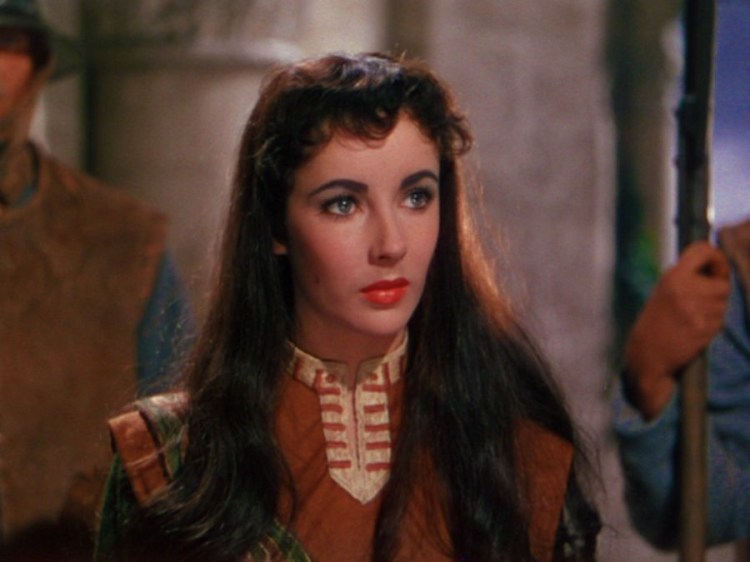
2. Mara and Sheftu in Mara Daughter of the Nile. This was a book I read for school, maybe sixth grade, while studying Egyptian History. The romance in this book is foundational for all that I ever found romantic afterwards. There’s danger, and spying, and plots, and people realizing that–oh no!–they actually care when all they wanted to be was indifferent.
3. Jane Eyre and Rochester…no, wait, hear me out! The tension in that book is AMAZING. You have this complex situation, where Rochester has all the social/cultural power over Jane, and where she is so (socially and personally) vulnerable and this almost ruins them both, but she is so strong, and she doesn’t let that happen. She is overwhelmed by her attraction to him, and she struggles, but is still able to walk away when she has to. Just goes to show that a scene without so much as a kiss or a touch can cause your heart to race.
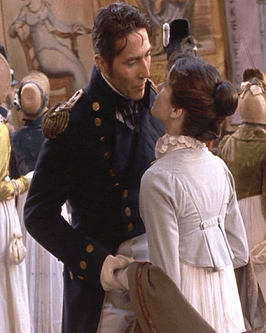
4. Anne and Wentworth in Persuasion. Again, brilliant tension. Every time they’re in the same room, you can feel them holding their breath, even if they never so much as speak to one another. Bonus points for the fact that both characters are older and more mature, and we do not see their first youthful romance, but rather it’s redevelopment after a severe wound and several years’ passage.
5. Little John and Cecily in Robin McKinley’s The Outlaws of Sherwood. Again, the things I love: danger, battle, secrets, subtle confessions of love when all seems lost. I think it is telling that most of these are from childhood/teenage years. I just don’t read a whole lot of stuff with romance in it anymore, and I think I’m pickier now than I was then.
6. This one is a bit of a stretch actually. I don’t actually advocate it, I just want to explain: Ivanhoe and Rebecca (not Rowena!) in, well, Ivanhoe. I did not care one fig for Rowena, and I actually thought much less of Ivanhoe because of his failure to see Rebecca for the incredible woman she was. There is a heartbreaking scene (which I wrote an analytical paper on in high school) where Ivanhoe is wounded and being cared for by Rebecca and he is–youthfully, shallowly–entranced by her beauty. Then he realizes that she is Jewish and, abruptly, all those fine feelings go cold. And Rebecca is saddened, but accepts it and carries on because she’s used to this kind of treatment.
I do NOT think this happened in the book. Its just what everyone wanted to happen.
So, really, this is Rebecca’s book, not Ivanhoe’s, and he doesn’t really deserve her anyway and I don’t even know why I’m talking about this. I feel the sudden urge to go re-read this book right now.
Note: So I’m scanning my shelves and not finding very many books with romance, much less ones I really liked, so we are carrying on to tv/movies.
7. Mulan and Shang. Hits all of my favorite tropes: girl almost gets killed BECAUSE she did the right thing. Guy has to get past his cultural beliefs about her. War, danger, and intense camaraderie.
8. This is so embarrassing to admit. I stopped watching NCIS when Cote De Pablo left the show, because I loved Tony and Ziva, and now that was never going to happen, so I didn’t care any more. I feel like such a youth! Also, again, a camaraderie romance. Shared experience.
9. This scarcely counts, because it’s not really a romance so much as a moment. (It is so much harder to come up with 10 than I thought!) Mary MacEachran and Robert Parks (Kelly McDonald and Clive Owen) in Gosford Park. This is one of my all time favorite movies, and the scene towards the end between these two is one of the main reasons.
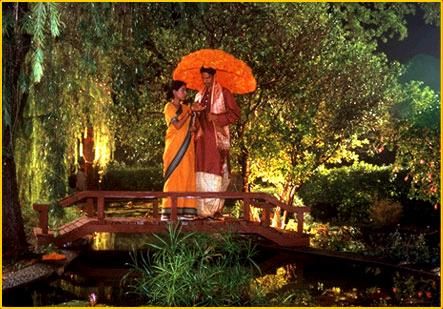
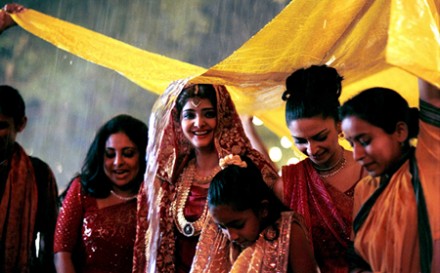
10. Alice and PK from Monsoon Wedding. I love this movie with a fiery passion, and this sweet, background romance between the somewhat absurd wedding organizer and the quiet girl from Bihar, is only one of the reasons. It’s all so soft and sweet, but there’s so much meat in the overarching stor(ies).
The scene between Ria and her Uncle towards the end, when he stands up for her breaks my heart every single time.
I love the abrupt contrast between Alice and PK’s sweet little wedding.
Merry, merry February! This year is already in a hurry.
(Note: I still have to sound out February every single time I spell it. Also, Wednesday and beautiful.)
So I wanted to talk about another major trope, although this one isn’t necessarily one of my favorites: The Evil Dark Lord.
So as with previous entries, I am going to talk about both the issues with the trope, and why it resonates nevertheless:
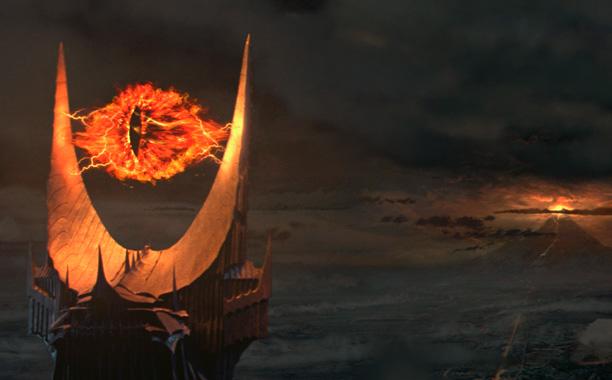
Here’s one basic problem with this trope: it usually feels so generic, even lazy. The Dark Lord’s motivations are not examined, he’s just pure evil because reasons. He’s the wall that the heroes need to scale, and just as static. And when we ask for a motivation, it’s usually a too-broad answer, like “Power” or “That’s just his nature.”
Whether the Dark Lord is so vague as to never even really be present:
Or an explicit metaphor for certain social ills:
(I mean the actual Voldemort, not the silly one, but this is the image I went with)
Or just a evil Lord with super a commanding voice, awesome cape, and intimidating background music.
The fact that three out of the four images I’ve used are completely comedic (they’re so easy to find!) is perhaps evidence of the fact that we don’t take this dark lord thing very seriously.
Now that’s not to say that this trope hasn’t been reversed, inverted, converted, and desconstructed a zillion times, because it has. Anti-hero dark Lords, redeemed dark Lords [again, Vader, later on], bureaucratic evil (this, I find, is most true-to-life: see Zygmunt Bauman’s terrifying garden metaphor), evil guy who wears white instead of black (le gasp!), evil that confuses you by having some good mixed in, and more thoroughly examined dark Lords and Ladies etc.
All that to say, the Dark Lord trope in its most traditional form is likely to get an eye-roll from most people. Here’s why: the types of conflict experienced (particularly in the Western world) are often more subtle. People wage verbal war to achieve or defeat a legislative vote, or a candidate, or a foreign policy proposal. Bureaucratic red-tape may harm quite as many people as those intentionally trying to harm others. Neglect can do damage as well as active cruelty, and some things that happen aren’t always easy to attach to a specific perpetrator. That being said, we almost always try to find someone or something simple to blame…even when the answer is far more complex. It makes us feel better.
Evils seem to be either small and personal–that way someone treated you that one time, or that one thing your friend heard about–so broad and global, we just can’t wrap our minds around them.
Also, *ahem*, we don’t always perfectly agree about what is worth fighting against, or how, or why. Clarity or unity on the subject is not a given.
The evils we try to portray in literature are naturally going to be a reflection of our own experiences. And if we have not lived under a true tyrant then that isn’t going to resonate with us. I know, I know, everyone thinks the candidates/politicians/leaders they don’t like are the most evil tyrants that ever walked the earth, but let’s step back from the hyperbole for a second, and think about the real world, where there are real tyrants.
Recently I have seen fantasy books criticized for making their evil empires too evil to be believed. “Cartoonishly evil” is the phrase…and, yeah, I get that. You can always tell when an author just kept adding on vice after extraneous vice just to make sure you got the picture. VERY EVIL CHARACTER. WORTHY OF ALL YOUR RAGE.
However.
I was thinking about this the other day while reading a book by Zainab Salbi. The book is called Between Two Worlds, Escape From Tyranny: Growing Up in the Shadow of Saddam. At each turn of the page in this woman’s biography I was astonished at how surreal it all was. So violent, so cruel, so manipulative, so deadly, so awful, and all done with a smile and parties.
The phrase ‘cartoonishly evil’ did come to mind, except this was absolutely real and terrifying.
And then, of course, no need to explicate on Hitler in WWII.
People wrote/write about “Dark Lords” because they experienced them. They wrote about the War to end all Wars (WWI, in that case), because they thought there had been one. They wrote about darkness descending over the land and impending doom (WWII), because that’s what everything looked like there for a minute.
And there are many people still living that reality today, and the examples I just gave are not even that far in the past. Not at all.
So maybe the Dark Lord trope seems overly-simplistic at first glance. But it would show incredible ignorance of history for me to scoff at the tale of the evil king who rises to power and nearly destroys the whole world, breeding to achieve a certain type of race, slaughtering by the millions, luring many into concession…because that actually happened and people you know saw it happen.
Back to Vader for a second. So he was eventually rounded out as a character (although, was he really? Episodes I and II were pretty painful to watch, and I didn’t make it through III) and eventually redeemed as well. And of note, it’s his broad-scale evil Empire, undeveloped self of New Hope that is the most iconic.
Now we have Kylo Ren (we also have Emo Kylo Ren!) who is made complex, conflicted, erratic, and unstable from the get-go. He is not the voice of evil authority, but seems kind of stupidly fooled into it. It would seem this is meant to be a deconstruction of sorts (perhaps) but we still have the Sauron-like, vague, unexplained background evil in the form of Snoke. Why? We don’t know. How? Not sure.
But when you watched the film, were you wondering over and over WHY Snoke was snatching up a young, foolish Jedi while fashioning a new evil Empire, or were you cheering on Rey and Finn and the others for standing against something we could all agree was bad?
Complex and confusing moral situations can make for great stories. But so can that rebels-vs-evil Empire clarity. Just a thought.
I would like to write something more purposeful and in-depth, but the snow-days are over, I am knee-deep in revisions, and I don’t know how much longer the Mousekewitz will sleep…morning naps have become rather unpredictable.
So it’s a useless facts kind of a day. 10 of them.
When I was, I think, four years old, my mom asked me what I wanted for my birthday and I asked for 3 heads of lettuce. That is all. My mom felt terrible getting her kid just…lettuce. So she found a little painted ceramic lettuce pot with a rabbit lid and gave that to me. Along with 2 heads of lettuce. I was not, nor have I ever been, any variety of vegetarian. I cannot explain any of this.
I have a climbing compulsion. When I see roofs, abandoned railway cars, construction equipment, abnormally large piles of dirt or wood, and especially FACTORY-SCALE LADDERS (like the kinds at coal plants!!!) I want to climb them so desperately I can barely hold my skin on. My heart is sort of racing just typing about it.
I used to have a horse-riding compulsion too. I mean, I can ride a horse, but that’s not what I’m talking about. If I saw a random horse in a field or anywhere, I tried to figure out a way to ride it. Twice I managed to finagle myself onto some random saddle-less, bridle-less (read: without these you are a sack of potatoes to them) horse. Twice I quickly realized that these horses were probably going to throw me or something and this was a terrible idea, and I slipped off before I could get rammed into a tree-branch: a friend that was with me one of these times was not so lucky. She broke her ankle and got pretty well scratched up.
I have been skydiving once, sort of on accident. I was sitting in the barracks common room, back in my Marine Corps days, and a few other Marines walked through the room and said “you’re coming skydiving with us! Someone else dropped out” I laughed. They came back through a few minutes later and said “Let’s go!” So I got up and went. Terrified.
In light of the above: I am NOT AT ALL likely to be bullied out of any belief or conviction I hold. I love to argue and debate! But I am VERY likely to be bullied onto a rollercoaster, or a plane out of which I must jump. I like terrifying myself with that stuff, but I often need a little push, and the bullying (in this unique case) helps.
I love to cook. As long as there is not a baby screaming, I find it quite relaxing.
I said this in the last 10 Useless Facts, but I feel it is important to reiterate: Coffee. Or as my lovely, cheesy t-shirt says: “Coffee is proof that God loves us and wants us to pay attention!”
I have five siblings and for this I am wildly grateful. I have a hard time writing any story character without siblings because it seems so SAD and unknowable. I don’t understand.
I cannot match things. Colors. Clothes. Styles. House decoration type things. I DON’T UNDERSTAND.
I love languages but hate grammar. I usually intuit grammar through hearing and reading, but the moment someone starts talking the details and mechanics of grammar it seems to futz with my wiring and I lose sight of everything. I am aware that this not always a good thing, but just talking about it makes me want to run for the hills.
Found this soundtrack recently and, while I can’t write while I listen to music (too wonderfully distracting) the whole thing is gorgeous, tense and evocative. It’s on my story playlist now. More for general atmosphere than for specific scenes, but perhaps those too!
For some reason it won’t let me post the video, so here is the link.
I have some feedback on my revisions and it’s back to work! I hope to be so much more disciplined with my time this go around so I can get it done much faster. I’ve already done most of the necessary think-work (this can be the biggest obstacle) and whereas I felt uncertain and nervous before, I’m already starting to get excited about how much better I can make this book.
I remember when I first started revising my manuscript and researching agents and what-not, and I saw all these authors talking about how many drafts they went through–untold iterations of revising!–and I thought “well surely I won’t have to do that many…I was pretty thorough the first time around and, hey, I like my story already.”
Such naïveté. I have had the benefit of a FABULOUS critique partner (and dear friend) from very early on in this process…plus lots of helpful friends/family/unexpected beta readers (my sister lives in Africa and when I e-mailed the revised MS to her, she happily handed it–all three books actually–off to her roommate and I have had some good feedback from her too!). But I’ve still got so much to learn.
On that note, I thought I’d mention a few things that I admire in books I read recently and want to learn to do better. Because reading good books is an education in and of itself!
Weaving threads: In both Jonathan Strange and Mr. Norrell and The Golem and the Jinni (similarly genre’d books), there are multiple story threads that seem tangled at first but come to make sense by the end, and I was impressed by the dexterity with which the authors pulled this off. Jonathan Strange and Mr. Norrell (JSMR) particularly (the ending there was stronger, though I loved both books).
Making you care: There’s a magic here. In JSMR, the narrative was very formal and distanced and you hardly ever got to see emotions and complicated internal narratives. And yet, I wanted so badly for everyone to be okay, and for everyone to be happy. The subtle few things the author gave you were just enough for you to imagine the rest on your own, and care for these characters. I was impressed. Similiarly in the G. and the J., I just…loved everyone. Each passing, random character–with rare exception–seemed to have such vitality and compassion. I wanted hope and redemption for everyone!
Building up: There was a scene in JSMR which was so vivid I can still see it in my head and it gives me a thrill. This was so surprising because the narrative starts out so formal and even tedious…then you get this dark, wild, gorgeous, painful scene that is so striking and so magical and feels…intense. I just wondered, where did she (the author) go from stiff parlor mannerisms and practical political magic to this? Beautiful bait and switch.
The real evidence here, though, is that while I was reading both of these books I frequently felt compelled to raise my eyes from the pages, look at my husband, and say “this book is amazing.” “I love this book.” “THIS BOOK IS SO GOOD.”
It seems so effortless on the page, just like a trained dancer’s movements look effortless. But I know a lot of very hard work went into that. And that’s where I am right now. The hard work part.
I have never been much for “reflect on the past year” and “make resolutions for the new one.” The big marker for a new year for me is remembering to write 2016 instead of 2015 on sundry items.
But I saw eleventy-million “NEW YEAR/WRAP-UP” posts and it gave me a moment’s pause. What did happen this past year?
A metric ton of stuff, that’s what.
We had a baby, which caused a pretty radical shift in most everything. There’s a dozen big baby-related landmarks that we have already passed. They aren’t lying when they say it goes fast, which is weird, because it’s so hard you’d think it would go slooooow.
We moved to a new state.
We did a lot of cross-country travel, some of which was just me and the baby and the wolf all by ourselves.
I got a literary agent. Pretty exhilarating, that. I am avoiding using exclamation marks in this post, but exclamation marks were involved, rest assured.
I spent six months on revisions and am so very ready to get cracking on whatever’s next.
We ran a Spartan obstacle race, and a half-marathon, and then we raced into the New Year (the race started at 11:45 Dec 31st, and we pulled into the finish line at around 12:14 Jan 1st).
Admittedly I wasn’t too excited about that last race. The little Mousekewitz is still a morning person (though 6 am is better than 5 am, am I right?) and doing things at midnight is no longer appealing. At all.
But we did it, and there were some fireworks, and I think it’s good to do things that are hard and inconvenient because it can be all too easy to harden one’s routine till it is immovable and fun-less.
I did not read as many books this year as I would have liked, but I read some really good ones! Here’s a few.
Jonathan Strange and Mr. Norrell was FANTASTIC. It took me a while to get through it because of…a baby, and a general hesitance on my own part, but once I got into it, I loved it. The imagery in this book is something else altogether. The characters seem like scant sketches at first, and their inner lives are never fully revealed to us, but it all just coalesces into something beautiful and fascinating.
In Defense of Sanity continues my G.K. Chesterton binge. He’s so contrary and determined to see the wildness and fantasy in everything, I love it. I just eat up these good, insightful essays about religion and society. I think I’ll read his Father Brown stories next, though I tend to enjoy his non-fiction so much more than his fiction.
Laura Hillenbrand’s Unbroken was so hard, painful, and…edifying. Is that the word I want? I think so. It bears a deeper discussion than I’m going to give it at the moment, but I kept thinking about it over and over after I read it. I always knew more about the European theater of WWII and the history of the Holocaust, as opposed to the Pacific theater and its own horrors. What these POWs endured is astonishing, and perhaps all the more so because it is the intimate account of the experiences of a few men. The most potent thing about this true history is the astounding difference hope makes. It sounds like a cliche, but bear with me! Those who did not hope, DIED. Despair, in such dire circumstances, is literally deadly. So often when we focus on the history of oppression we talk about the LACK of agency, the LACK of opportunity to exert will, when we should be talking about how the mere act of hope and endurance–the mere determination of “I WILL get through this, I won’t let my arms go limp”–is often the difference between life and death. Those who have the least agency imaginable can still affect the outcome by not giving up, by enduring, and–hardest to do–by forgiving and moving on. I hate how platitudinal that sounds, because this one man’s history shows how bone-deep, gut-wrenchingly true it really is.
Re-read: The Screwtape Letters. I forgot how good this book is. You know that moment when someone describes how poorly someone behaved, or how they did something despicable or rude or vile, or how people have these nasty little habits that will drag them down in the end…and suddenly your eyes are opened and you realize you match their every description? This whole book is that moment. For those who have not read it, it is senior devil Screwtape writing to junior devil Wormwood telling him how to tempt his “patient” (a human man) to folly, neglectfulness, sin, duplicity, and then ultimate enslavement and subsumption. The devil really is in the details, because some of Screwtape’s chief advices involve distracting a given patient (human) with lunch and city buses (or blogs and tv?) when they were so dangerously close to exploring the question, ‘what does life and history amount to anyway?’ And that would have led to all sorts of thoughts about truth and purpose…very dangerous indeed!
Anyhow, those were the main favorites.
Not much else for now. I’m going to try to use this extra new-year steam to get lots done this week!
Not much needs to be said as I imagine most people are ensconced in Christmasness and family time.
We took a 9 hour road trip to see our families and are enjoying all the merriment that goes with it. Singing Christmas carols makes the little Mousekewitz happy, and my brother’s dog (also a wolf) makes our giant wolf happy.
So far we have just hung out with family and friends, but last night we (my mom, my husband and I) took the little Mouskewitz to the fancy part of town where they have the best lights, and we walked around under a nearly full moon and some truly gorgeous Christmas lights.
Today I will make Hot Buttered Rum mix for Christmas Eve dinner, and my dad is making a truly epic meal (he loves to do this…he has been working on it for weeks). My parents, my parents-in-law, sister-in-law, brother-in-law, my youngest brother, and my second-to-youngest brother and his girlfriend will all be there. Plus wolves, obviously.
The funny thing is, this will be a small Christmas. Lovely, but small. I have three other siblings, two other in-laws, and seven other nieces and nephews (and six other dogs) that are not coming this year. But next year there will be a wedding, and EVERYONE will come! EVERYONE! Even the sister that lives in Africa!
Our Christmas traditions are simple:
-we sing carols
-my dad reads the Christmas story (from Luke, I think) and he also reads a book called “The Other Wise Man” which chokes everybody up each time.
-we eat a big Christmas Eve meal with my in-laws (who have been friends with my parents since before I ever married) and my Dad usually does the main cooking because it’s his jam. It seems funny, because he’s actually sort of a Tim the Toolman Taylor (without the accident prone-ness) and a tough West Texas guy, but man does he love to cook.
I never thought of my family as foodies but my husband tells me we are. I just thought we liked food, and like it to be good and flavorful. Doesn’t everyone?
-Stockings happen as soon as you wake up (usually very early).
-Then breakfast (usually sausage casserole)
-Then presents: ONE-BY-ONE
This year we are doing Christmas twice (weird) so that we can have one w/ my family, and one with my husband’s family, even though we’re all doing Christmas Eve together.
Also my mom and dad are leading a Christmas Eve service at my Uncle’s bar. (You know. Church. In a bar. Seems reasonable to me)
I don’t normally get into all that ‘Baby’s first Christmas!’ stuff, but I hope that the little Mousekewitz enjoys the story of Christ, the worshipful season, and the merriment!
Merry Christmas! And a (quite) belated Happy Hanukkah!
I’ve been wanting to write a post all week, but I haven’t been feeling very clever, and nothing of merit came to mind. But I just finished a fantastic book–I’ll review it at another time–and it reminded me of a trope that I love. It’s often done badly, but when it’s done well, I truly love it.
There are a couple of official varieties per TVtropes: Fisher King, Rightful King Returns, King incognito, or Hidden Back-up Prince.
A lot of people get tired of this trope and I understand why. The most common arguments against it are as follows:
It’s been done to death
Who is to say she deserves to be Queen just because of her bloodline?
Oh of course she’s a princess, on top of everything else! Sure. Great.
Why can’t the characters just be normal people? What’s the obsession with royalty?
Why always a monarchy, a King? Isn’t that just a synonym for a dictator?
Aren’t we past all that simplistic fairytale nonsense?
Some of these complaints are valid, but here is why I love the trope anyway (when done right) and why I think it continues to appeal:
First: There’s a coming-homeness inherent in this type of storyline. It’s about pieces fitting together, and someone being the rightful something. We live in a world with tremendous possibilities and the idea that you can be whoever or whatever you want to be. But people wouldn’t take so many “Which element are you?” “What is your Meyer’s Briggs Type?” quizzes, or so tightly clutch sundry ‘identities’ if we didn’t crave to have something grounded and inherent. Something rightful. Something to which we eventually come home after all our wanderings, and which welcomes us as native.
Second: This is particularly strong with the Fisher King type of trope–where the very health and nature of the land is inextricably tied to the reign of the true king. There is the implication of restoration and renewal–of either peace, or of magic, or of daylight.
Third: Authority. Now hear me out on this, because authority is actually most people’s biggest beef with the whole “true King” trope. Who is that bloke to shove in and rule over us? I call for a democracy! Well, of course, we being 21st century beings with 21st century sensibilities would say that. We live in a society where we have the blessed freedom to either praise or deride, support or mock, our elected leaders. Flawed though our system may be, we are not beholden to our leaders the way most subjects have been to their Kings or Queens. We might like or respect a given leader once in a blue moon, but I think awe is usually out of the question. And I think we’re all pretty happy about that.
But there is still this craving for a trustworthy type of authority (even if only in more prosaic ways, as in the authority of science, mathematics, or an expert in a field) as if we are living in some ancient legend, and we are willing to suffer all these fools until some real leadership sets in. That there was a key that fit the lock, and it could be trusted to do so, because that’s what it was made for. That there was something that was so naturally correct you don’t want to mock it. That’s why the ‘rightful king’ thing and the ‘chosen one’ thing often get caught up together, because everyone takes the prophecy or the bloodline for granted that they are indisputable FACT. For the record, the whole ‘chosen one’ trope is not my favorite.
Anyhow, you might be surprised at the number of people (from either end of the political spectrum) that I have heard muse that having a monarchy actually appeals to them. Naturally they immediately retract and say “I mean obviously it would just turn in to a dictatorship and it would never work, but…wouldn’t it be nice if it did…work.”
I think this goes down to the fact that we know things are pretty messed up and we want there to be a straightforward way to un-mess it up. Bureaucratic solutions don’t exactly thrill the adventurous soul, and they don’t usually work how we want them to. It also explains why the rightful rulers are often supernatural in some aspect, because we’re well aware that we humans–even the best of us–cannot get it quite right.
(I keep saying ‘we.’ Perhaps I should say ‘me.’ But I do think that this trope has wide appeal, even if people often brush it off as old-fashioned)
Anyhow, this leads to…
Fourth: I think this is the one many people don’t like; the whole “rightful king” thing is strongly related to the Messianic concept. The person who is going to come and fix everything in a whirlwind. To say that this is merely a literary appeal is to say far too little. Several major religions take this idea very, very seriously. Judaism: a Messiah is coming. Christianity: the Messiah has already come and he will come again. Twelver Shia Islam: the hidden Imam will return.
There are others. These beliefs portend a mixture of apocalypse and eucatastrophe, which is to say, that they bring both great joy and terrible danger. The world shudders and sheds an old skin and none of us know what comes next.
In the book I just finished there were a series of fantastic scenes where a given King may or may not be returning, and the whole country just wakes up. And it does so in a way that is simultaneously thrilling and a little frightening…good, but not safe or tame. Like Aslan. You’re frightened, but also ecstatic, and you would just dive into the danger head first.
I’ve always liked that edge-of-the-precipice feeling.
Fifth: To bring it down a notch, there’s just always something exciting about someone being more than what they seem and about who they are affecting their choices and how you see them once you know. And it’s exciting because it’s true. Every single person you ever interact with is more than what they seem. This is not profound. We all know this. They all have stories, sad or joyful, rich or odd. There is something wonderful and strange about them, even if they don’t yet know it themselves. Even if you don’t like them. Even if the only words you say to them are “Good morning! That’ll be $6.95! Have a good day!”
So I know this trope is a little passé right now, but I also think it’s millennia old for a reason.










 J. L. Odom