And then what happened?

Honestly, I don’t know. Watch, wait, and work, I guess.

One week out from publication and trying to hold this process with open hands. With self-publishing you kinda know going into that it’s going to be an uphill battle. You’ll have an initial surge from friends and family, but then when that tapers off you have to keep spreading the word, keep throwing what kindling you’ve got onto the fire in hopes that it finally takes and burns on its own.

I’ve got to work on book 2, which I love so so much, to get it right. There isn’t much major work to be done–one or two scenes to add, a handful of themes and character bits to refine, then sanding everything down and polishing it up for the line edit. Like bringing rough flour through the sieve a few times. You’re always surprised that you missed something, so you gotta do it again.

My hope is to finish the revision by the end of the summer. I have a tentative schedule for book 2 publication, but I don’t wish to make promises too early on, so I’ll hold off on posting all of that until everything is well locked in for book 2.

It’s tough to let the book go, not knowing whether it will sink or swim, but Oh man has it been such a joy writing these. And those who have read it and loved it–both friends and strangers–have amazed me with their words and their appreciation of this story. So I really hope to continue on and do it justice.

But first, going to take my kids to the park! It’s that kind of day!

Add to goodreads

Buy on Amazon

Buy on Barnes and Noble

Publication Day! A Book about Exiles, Languages, and War

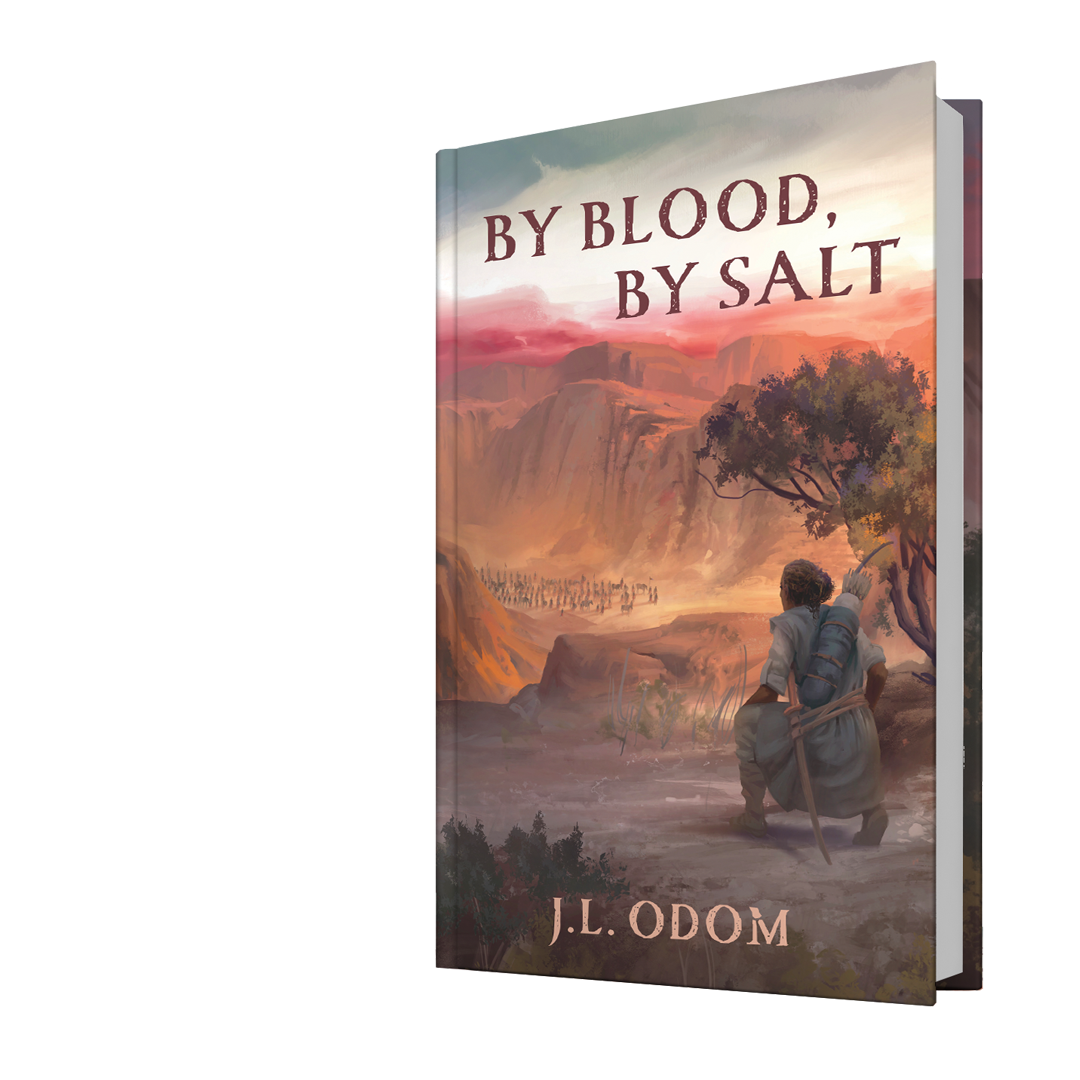
So today, as I post this, my book is now published! I’ll spare you the long saga–and it is quite long–of how this book came to be, how I wrote it, and all the hills and valleys between then and now. It’s a good story, actually, but not for today.

Today, I’m just going to tell you that writing this has been one of my great joys over the last two decades. I hope it can bring others joy, or provoke thought, or fascinate, or challenge, or intrigue. Maybe even all of those, if it were possible.

The gorgeous artwork on the cover was done by Jeremy Adams

This map, which gives the perfect sense of this world, was done by Rhys Davies.

Here are some bits and pieces from reviews on goodreads. Obviously, being the author and hoping you will read the book, I have chosen a few of my favorites. But feel free to go look for yourself and see if this is a book you too might love. And, for the record, these quotes are from Advanced Review Copy readers either via goodreads forums, booksirens, or instagram. Much as I’m thankful for any supportive reviews of loved ones, none of these quotes below are from people who know me at all in real life and most are from people who don’t know me by even the slightest of internet acquaintance : ) I just put the reader initials here, but if you want to read the full reviews here is the link: BY BLOOD BY SALT REVIEWS

“This book just grabs you and pulls you into the world. Deserts, cultures, tongues, tribes, gods, jinn, and a political upheaval, waiting for the final match to strike.”

-J

“There are books that have incredible world-building, tough as nails frenemies, and a message of survival at any cost. Alliances that shift like the sand, words which can only be believed if they are bound with oaths of blood or salt, and to be silver-tongued is as important as any archery skills. The kind of book that resonates with the reader long after the last page has been turned.

This is that book.”

M.L.

“From the beginning, I felt I was in every scene. Every character felt real and complete.”

-M

“I devoured this book in 24 hours. It grabbed my attention with the cover and the title and the summary and I just felt the pull, the need to read it.

…All in all, this story is one I will be thinking about until the next installment is out. I am invested.”

-I

“By salt, I almost wish I didn’t read the book already so I could finish this series once it would be fully published, because that’s definitely what this deserves. I devoured this book in a week even though I had a very busy week.

Please go buy and read this book, I want to talk about it with others!”

-J. S.

“I’m baffled to see that this book is not published by the big 5.

This is easily one of the best fantasy books I’ve read in the last 8 9 months. Up there with some big hitters.”

-H

“By Blood, By Salt is SO well written. J.L. Odom has created an immersive, fantasy novel full of adventure, intrigue, and politics. The setting feels so real – the descriptions are so visceral. I loved the unpredictability; the propulsiveness of the book itself. I will recommend it to everyone.”

-D

I hope you enjoy this book, the first in the Land of Exile trilogy. Book 2 is already written and in revisions, in case you’re wondering : )

Add it on Goodreads

Order on Amazon

Order from Barnes and Noble

Order from Bookshop or your local bookstore

Order through Kobo

Order through Google Play

Order through Apple

AND if you care about binding and color quality, you definitely want to go with a paperback from Barnes and Noble or any local bookshop versus Amazon.

The Je Ne Se Quois and what I DO know.

It is often easier to take note of the things I don’t like about a book than to understand what constituent elements come together to form something I do like. This is why people’s rants on goodreads are often longer than their raves.

This is partly because good writing–good storytelling–is rather seamless. And since you don’t see the seams, you don’t notice how incredibly fine the stitching is, how deft the handiwork, until you have given it the close examination that a slooooow read, or a second read, would entail. So you simply enjoy it for what it is and then, grasping for words, try to convince someone else that they will enjoy it too.

Sometimes I’ll read a book and encounter a character that graces the page but briefly, yet already I know and love them. And I’ll think, how? How did the author do that? How did they endear me to this random side character so quickly, so perfectly. How, with so little apparent effort, did this person come alive before my very eyes.

Well I don’t know. I still don’t know. It’s a gift. A marvelously cultivated skill. But it reads like magic.

Or perhaps it is a matter of action. My heart is pounding. I am riveted. I feel the danger, the smart of the blow, the heat of the fire, the breathlessness of it all. It’s all so real.

How did the author make that happen? I literally have no idea.

Or, I read a book and find a confluence of prose and emotion and theme so powerful, so perfectly intertwined, so exquisitely wrought, that I want to march across many miles, pound on the author’s door and demand they answer me

“How did you do this? What elven magic did you find? What divine spark? What ancient fire? What holy touch? HOW DID YOU DO IT?”

My guess is they will shrug their shoulders and say “You know? I don’t know.” They know they worked hard, of course. They know they labored, at times, in starvation and drought, and at other times in rains and floods and delicious breezes of inspiration. They took care. They crafted thoughtfully. But we all try to do that and it doesn’t always have that mysterious je ne se quois.

I cannot speak to some secret elixir, nor to the perfect craft. In any case, I am far more a student than a master and I don’t know that my opinion holds much weight. But before I give up and call it all hopeless, there are a few things I DO know.

First: A good author does not protect their characters from the reader’s bad opinion. They do not shield them from their failings, from their natural consequences, nor from the possibility of not being liked and not being trusted. In that strange and inexplicable way, they give their characters free will. They do not contrive circumstances, nor misshape side characters, to serve the protagonist. Like God to his people, or a father to his child, the author must sometimes give a character over to their folly and failings. They might disappoint the reader. Just as a real person might disappoint a friend.

Second: A good story might have many threads and many themes, but they cohere. The themes may even argue with one another, but it is, as the rabbis said, “an argument for the sake of heaven”…the themes argue in the pursuit of truth, always in the pursuit of saying something beyond a platitude, or which coats the bones of the platitude with flesh and blood so it can breathe and live. You don’t have to say something grand, something for the ages. But you have to know what you’re about.

Third: Your prose may be stark and simple. Or it may be florid and dramatic. But it must be strong. It ought not “merely serve.” The book Wind, Sand, and Stars is supremely eloquent, and moved me deeply. Chaim Potok’s The Promise battered me heart and soul, but his prose–on the surface–is pragmatic and plain. Both had muscle and power. Both caught hold of the soul and intent of their work. The prose is the vehicle for the story, and whether it is a beat-up old truck, or a sleek sports car, it had better have an engine that’s properly put together and can bring the story over the rough roads.

Fourth: You better mean it. Oh, don’t deceive yourself. You had really better mean it.

There’s certainly more than that. But it’s a start.

To Persevere or not to Persevere? The Classics

I am going to stereotype two typical views on how you should read. I am going to formulate them at their extremes, so bear with me:

Perspective A: It doesn’t matter how you feel about the book or whether you enjoy it at all, get over it and read all the great classics, or everything perceived as “intellectual.” Tough it out through the dense and ancient tomes, even if you hate it and it doesn’t make sense. Otherwise you’re stupid and a coward.

Perspective B: Don’t read anything you don’t want to read. If it’s hard, ditch it. If you’re bored, give up immediately. If you’re not in the mood, get rid of it. You should never slog through something that doesn’t keep your goldfish-brain screen-addled attention. You should never have to think or work or challenge yourself. If you think you have to do that you’re a snob and a fake and a scold.

That is the most inflammatory way to view both ideas.

So, okay…let’s tone it down. Maybe it’s more along the lines of:

Perspective A: The classics and the ‘hard books’ are worth it, even if they can be difficult and require endurance and effort.

Perspective B: It’s okay to read books you actually enjoy. Reading is supposed to be fun. Not everything should be a slog.

So now that we’ve calmed ourselves and tried to be reasonable and brought the debate back to earth, let’s address the heart of the question. Should we or should we not require ourselves to persevere through difficult works of literature.

I will give my own simple answer: on average, yes. But sometimes, no.

Helpful, right?

I finished The Brothers Karamazov with something of a dutifulness, but I am so glad that I did! It took me a really long time to finish Middlemarch, but it rewards perseverence!

However I nearly threw Nicholas Nickleby at the moldy, spider-infested wall of a condemned barracks while on watch duty one night. I promptly stuffed a random paper from the duty desk into the book at page 233 and there it has remained for fifteen years. I suspect it will remain there till the end of time. After too many times of opening the book with gritted teeth and eyes rolling with pure irritation with every single character, I could endure no more.

Sometimes there are great riches that only the long-suffering can ever receive. Sometimes you suffer long for no good reason. I cannot tell you which books will be worth it to you. I can’t even tell me which ones will be worth it to me!

The best I can do to resolve this question is this: the number of times I have been glad I persevered through a difficult text far, FAR outweighs the number of times I have regretted pushing through. Food for thought.

The Everlasting Trope: Redemption Arc

An established villain–with all the sinister character and crimes to prove it–begins the story in darkness, and ends it having inched towards the light. On the face of it, this trope really is that straightforward. And I might have thought that, of all tropes, it has the most universal appeal.

But I have learned that this isn’t true. Some people have major beef with the redemption arc. Why, you might ask? Because they feel that redeeming villains is a negligent practice, which glosses over evil. “I,” they say, “Would simply not be evil in the first place.”

Call it the perspective of the older brother in the story of the prodigal son. The pharisaical view. “Why should he get redeemed? He, of all people, doesn’t deserve it.” The truth is, there is probably some evil, some grave sin, some horror from which we–deep down–think a person really can’t be redeemed. Don’t think of Mr. tall-dark-and-handsome fantasy villain whose terrible evils are either a smokescreen or simply too detached from reality to matter very much. No, think of real crime, real abuse, real prejudice, real cruelty in real life.

Can THAT person be redeemed? Removed from the abstract, do you hope for their redemption? Maybe, maybe not. But sometimes the real is too hard a place to start. So we turn to fiction to suss out a problem that seems hopeless in reality.

So, to our typical trope questions 3:

  1. When does it fail?
  2. When does it work?
  3. Why does it resonate?

When Does it Fail

Most of these are fairly obviously

-a redemption arc fails when ‘there was no hill to climb.’ They were never really bad to begin with, just ‘misunderstood’ or they simply appeared that way. It was all a ruse to give us a ‘vibe.’

-a redemption arc fails when it’s too easy or too abrupt. The change of heart happens without logical lead-in and without any trial or anguish whatsoever

-likewise it fails when the change is too absolute. No lingering struggle. No residual habits. No bruises, no scars.

-a redemption arc usually fails if there is no cost associated with the change.

-it fails when it just doesn’t make sense, either for the character or for the setting

-and this goes without saying (but I’m going to say it anyway) it fails if is not honest about the premise.

The truth is, it’s a unique challenge for a redemption arc to be meaningful in a society that doesn’t really believe in sin in the traditional religious sense, which is to say, a culture that doesn’t really believe there is something fundamentally corrupt within each of us. Something literally irredeemably bad barring, I dunno, some kind of radical miracle or something (what might that be?)

What does a redemption arc have to say to someone who can never do more than say “Yeah, I know I’m not perfect, but I’m, like, a decent person.” What can a redemption arc offer to the person who uses the failings of others as a safeguard against self-examination? What good is a redemption arc to someone who believes themselves to already be good ‘enough.’

No, a redemption arc is best spoken to those of us that know, deep down, that many of the stories we tell ourselves to justify our words and actions are, in fact, downright lies. Those of us that have realized, or are starting to realize, that even our best and kindest behaviors are…kinda crap. Our motives are ever mixed. All the successes we’ve birthed instantly clamor for pride and self-satisfaction. Our thoughts are an unending ticker-tape of folly.

So to that audience, in which I am most certainly included, I move on to the second part of this analysis.

When Does it Work

Simply put, this trope works when it does the opposite of everything mentioned above.

A redemption arc succeeds when:

-the evil was real, the sins were great, the person was truly corrupt. The hole they were in was deep and dark and chiefly of their own making.

-the path of redemption was long and arduous, achieved one infinitesimal step at a time. A miniscule act of mercy becomes a monumental achievement.

-once the villain has turned, or the cruel step-mother softened, there are lingering traits and struggles. The eyes blink painfully in the fresh and brilliant light of day. One is tempted to retreat to the shadows.

-the cost of redemption is high. There is loss of status or power, loss of original objective such as vengeance, loss of friends or comfort or convenience. Loss of the “right” to be angry and bitter. Loss of the intoxicating enjoyment of hatred. Loss of the triumph of looking down on others. Loss of the certainty that you are right and will win. And maybe the loss of everything else in between.

-the character arc makes sense. There are touchstones of reality–even in a setting with wild magic and apocalyptic stakes–that we as readers can relate to. We recognize that anger as our own. We recognize the moments of confusion, conflict, hope, desire, need. When the villain begins to question things, we believe that the cracks in their facade were made by truths that exist outside of the story, not merely by fiat, not merely by the author’s contriving hand. It is best if we see the worst of ourselves in this character, then to see the hope they stand to find.

-there is an honesty about what redemption really means. Redeemed from what? Redeemed to what? To be redeemed means to be bought back from hopeless debt. To be irretrievable, yet to be retrieved. A good redemption arc must understand the reality of a truly hopeless state, and yet believe in such a thing as the miraculous. Most people struggle with one or the other of these two things. They either don’t really believe in true depravity or they don’t really believe in a good profound enough to transform it. And yes, it can all have a generic ring of platitudes if said in isolation, as if merely written on a poster on a wall with a pretty picture attached.

Why does it resonate?

I am going to plagiarize myself. I wrote a twitter thread about this some years ago. To my amusement I think the origin of this was seeing a variety of twitter debates about being irritated with redemption arcs. Specifially, twas the age of Kylo Ren, and fangirling, and angry star wars diehards, and drama, and nonsense. The beforetimes, if you will. People were questioning why we kept trying to redeem these angry, stupid young men who didn’t deserve to be redeemed and who were causing so much destruction. Just leave them to their fate, they said. They don’t deserve our pity.

Needless to say, this grieved me.

And so, back when I used to wade into the occasional drama online, I wrote this:

I’m not saying anything new when I say that, for many writers, stories about brokenness and redemption are about trying to visualize a roadmap for our own souls. Trying to prove, by fiction, that there is hope for us. That we are not forever stuck where we are right now.

When I first started writing, my story was about any and every fun trope and adventure that struck my heart. Over time, it became about what it felt like to be cut off from hope, to despair of rescue…and to find out the despair was a lie.

And how sloughing off despair is actually really hard, because it’s become who you think you are. You start to define yourself by being “cut off”, by being “outside.” We cling to any identity we can as a rope, even if it’s a terrible one.

And I think it’s poignant that, especially in fantasy, the “sins” of the characters are egregious (as opposed to “well I was a bit snippy with my husband today”) because that is a right viewing of our own souls.

As C.S. Lewis puts it in Surprised by Joy: “For the first time I examined myself with a seriously practical purpose. And there I found what appalled me; a zoo of lusts, a bedlam of ambitions, a nursery of fears, a harem of fondled hatreds. My name was legion.”

I love a redemption arc because it exposes us, brings us low, then gives us hope. First the bad news–it is hopeless. You can’t fix yourself. You’ll try, but you’ll fail. There is no getting out of the hole you dug. Then the good news–yet, by a way you never could have imagined, there is hope. There really is a way out. There is a hand reaching down. Indeed, a hand stooping all the way down to raise your foot where you could never have done it yourself. A hand that will lead you the long, long way home.

The Thing About Tropes is…

They only tell you what a thing might be, not what it is. I simultaneously love thinking through tropes, but hate using them as a guide. I understand why people like to do trope lists for books–a bullet-point format of why you might enjoy a given novel–but we all know that this merely skims the surface. We all know just about any trope can be executed wonderfully or poorly. And we all know that some books could never, ever be meaningfully distilled into mere tropes.

Try making a trope list for Middlemarch or The Brothers Karamazov and see how far you get! And if, by some miracle, you actually can extract a few clear tropes, tell me if that list gives you even the faintest notion of the true nature of the work.

Tropes are fun, but they clearly have their limits. Thinking in terms of tropes gives us mere dots on a graph so that we draw the slope we think exists and hope it hits the desired trajectory. But it is all so desperately inadequate.

The most interesting thing about tropes, in my humble opinion, is the WHY behind them. Why are we attracted to certain standard stories and situations. What draws us? What makes it work? What makes it fail?

Well turns out I have spent an inordinate amount of time on this very subject! Here I am listing every trope I’ve analyzed on this blog in one handy-dandy location. I haven’t done them all (obviously) but here they are in no particular order.

The Everlasting Trope: Enemies-to-Lovers

The Everlasting Trope: The Failed Hero

The Everlasting Trope: Redemption Arc

The Everlasting Trope: Battle Couple

The Everlasting Trope: The “Crew”

The Everlasting Trope: The Love Triangle

Everlasting Trope: Dash or Die

The Everlasting Trope: Anti-Hero

The Everlasting Trope: Bad Trope Edition [Not Like Other Girls]

Everlasting Trope: Disguised Noble Hero

The Everlasting Trope: Stable Boy among Kings.

The Everlasting Trope: The Chosen One

The Everlasting Trope: Star-Crossed Lovers, Friends, and Foes

The Everlasting Trope: The Dark Lord

The Everlasting Trope: King’s Return

The Everlasting Trope: Cinderella

On Tropes and Subversions Thereof

If your favorite (or least favorite!) trope is not on the list, let me know and I’ll dive into it. Because I want to know why we love what we love and why certain stories resonate time and time again, no matter how often they are told. I know there are some glaring exceptions (*cough cough* enemies to lovers *cough cough*…UPDATE. I HAVE NOW DONE THIS ONE)

Update in List Form, for convenience

The goings-on lately:

  1. We had family in town for two days including a brand new, very tiny niece. I am proud to say she nearly fell asleep in my arms and was (overwhelmingly) adored by all of my kids.
  2. A nephew was also born very recently, premature, but he is doing very well and I can’t wait to meet him too!
  3. Yet another nephew is set to make his debut several months from now!
  4. In case you were wondering, yes, I do have a big family.
  5. I got a real live advanced review on goodreads. And it was such a good and thoughtful one! From someone who doesn’t know me at all!!!!! I think it’s possible I would have been nearly (but not completely) as happy if it were a less glowing review, because just having a review is so, so cool!
  6. All but one of they physical Advanced Reader Copies I sent out have reached their destined reader, so that too is very exciting.
  7. We are about to head into a long, slog of a month due to work schedule, and I am NOT excited about that. But it must be endured, hopefully with a modicum of grace and maybe even a little patience.
  8. I am still mucking about with the first 10,000 words of Book 3, The Great Re-Write, because I am trying to examine the tone and purpose of those beginning chapters.
  9. I got the feedback for book 2 from my dear friend who has read essentially all versions of all my manuscripts and has never failed to do far better by me than I deserve. I have one other person reading it, and once they give me the feedback, I’ll pause on book 3 re-write and set right to getting book 2 into publishing shape. I am very excited. It’s got all my favorite things in it.
  10. I nearly halved the mountain of clean laundry between yesterday and today. I must go forth and make a few more dents in the pile.

That’s all for today!

The Double-Edged Sword of Fantasy

I love the fantasy genre. I write in the fantasy genre. You have so much room–as either a reader or a writer–to breathe, to explore, to wonder and wander. To experience joy or grief or hope or conviction and walk away enchanted, thrilled, and sated. Whether you love cool magic systems, strange cultures, epic battles, conflicted characters, stunning landscapes, philosophy-coated plot or plot-coated philosophy, this is the place for you!

But there’s just one problem. Fantasy–particularly high or epic fantasy–is more or less made from scratch. Unlike historical fiction, it is not a plausible story painted on the already existing background of real events. Unlike non-fiction, it is not inherently informative. Unlike contemporary fiction, it does not have the touchstones of daily life on the actual third rock from the sun and the realistic pathways of the commonplace.

It has none of the guarantees of romance, and none of the clear objectives of a mystery. These two genres are particularly beloved because you know what you’re getting into to a certain degree, and that is often exactly what we want.

I do not think one genre or the other has any special claim to greatness. In the hand of a fantastic author, it hardly matters.

But in some strange ways , Fantasy is most like Literary Fiction, despite most people thinking they are polar opposites. Fantasy is nonsense and popcorn, while Literary Fiction is cerebral and high-brow, right? Right? Maybe, maybe not. But that’s not what makes them similar to a cautiously approaching reader, wondering what they are about to get themselves into.

In literary fiction, you walk in knowing nothing. The back of the book tells you “a soaring debut” “Joe-schmo pierces the soul and examines the contradictions of our inmost thoughts” “a harrowing examination of existential focal points” or whatever. And maybe it really is all those things, or hopefully something a little more coherent than that because I was just making stuff up.

You don’t know if it will bring you joy, or disgust you. You don’t know if it will tell a story or just convey a metaphor. You don’t know if it will end hopefully, tragically, or in plain, bland, exasperating neutrality. Will it even answer the questions it poses? Who knows? It certainly doesn’t promise to. You could love it or you could hate it. But you really have to dive in to find out. And often you find yourself reluctant to do so, because these things are so terribly hit-or-miss. If you are going to invest in that odd style of prose, those loosely woven vignettes, that lopsided angle of sight–you want to know that it’s going to be worth it. And you kinda can’t know that for sure, reviews notwithstanding.

Now with Fantasy, you do usually get an idea of the surface of what you’re getting into. The back of the book will give you something to work with. End of world stakes. Farmboy to hero pipeline. Grimdark. Morally gray characters. Cool magic. You get the idea.

But those are mere bullet points extracted from a whole entire world that has been built from the ground up, barely more helpful than the phrase “soaring debut” or “poignant and necessary for our times.” Indeed the tropes may be the only touchstones you have to orient yourself in your new surroundings, which is why I think authors sometimes rely a little too heavily on trope-marketing. Marketing a whole, complex, world of the likes of Tolkien is a touch harder than marketing “chosen one” or “honorable bastard” or “Greek-inspired”

The question becomes, how hard am I willing to work to understand a brand new world if that world is ultimately going to disappoint me? Am I willing to invest in the ongoing discovery of something constructed completely from scratch if, come book 3, it all falls to pieces and none of it comes to meaninful fruition? It was stuck together with elmer’s glue and when the pressure of the needed character development and the convoluted plot became too much, it collapsed.

Even an amazing world will not be guaranteed to satisfy, because there is such a thing as differences in taste. And you might not be able to figure out if this is a place you want to spend a lot of time just by looking at reviews. You have to dive in.

Is this relationship with this world and the characters born and raised there going to be heartbreaking in the worst way, or heartbreaking in the best way?

And there really is only one way to find out. Big risk, big reward.

Reviews are for Readers

Stating the obvious, I know, but as a recent newcomer to things like booktube and bookstagram, it turns out that it’s not as obvious as you would have thought! The way some reviewers feel the need to add 57 caveats and apologies to explain why they gave a book 3 stars. Why? WHY??? When did this happen? Whose idea was this? I do NOT like it. How am I, as a reader, supposed to find out if I’m going to like a book if nobody is willing to be honest about the book? Or if they feel like they’re going to be run out on a rail if they hated something everybody else loved. Doesn’t make a lick of sense.

As an author diving headfirst into self-publishing, I find that at least a bit of the trouble might stem from the rise of self-published books or, more accurately, the chief way that self-published books are inevitably promoted. That sounds harsh, but hear me out, I have a point, I promise! Everybody wants to help each other out. Everyone wants to give each other a hand up in this tough journey where success is definitely not guaranteed (not by a long shot). Everyone wants to encourage rather than discourage. This is a good thing! I get it. I totally get it. It comes from a place of kindness and generosity.

But it can lead us to a place of cowardice and dishonesty. Your friend wrote a book? It was less than perfect. How could you say something harsh? How can you bear to hurt their feelings?

Well…you gotta. In real life, when we soft-pedal things, there are consequences. In book life it’s not that dire, but as for me–as a reader–I prefer brutal honesty.

I say this with my heart in my throat because I fully know that someone may write a review of my book that will punch me in the gut. They may even write one that I feel is desperately unfair and just flat out wrong. It’s gonna suck.

But that’s okay. They should do that. The absolute best books in the world have scathing reviews. And it’s okay to not like something. It doesn’t mean you’re a jerk. If you hate a book, you should rate it accordingly, and stand your ground.

Even beyond this, an honest, critical review might actually help another reader to see that they would like this book! You hate that trope? Well maybe Joe over there loves it. You like a faster-paced book? Maybe Jane over their likes a slower more contemplative narrative.

Dear friends have hated my most beloved reads, and (though I winced when I did it) I have DESPISED someone’s most precious book-of-the-heart.

And have you ever heard of how harsh and critical Tolkien was to Lewis? Thank God for that! Their friendship withstood it, and so did their works.

LAST NOTE TO THIS RAMBLE: I’ve also seen authors respond very angrily and ungraciously to negative reviews or even to positive reviews with mild criticism. I don’t understand this. It seems so unwise apart from undignified. Where were your siblings? Did they not give you a hard time? Did no one ever tell you ‘nope, it’s not that great’? Where’s the resilience friends? With the fortitude to persevere in writing and publishing a book should come a similar fortitude in bearing up under criticism with grace.

Bit by Bit

We’re getting there. My book is now up for pre-order on Barnes & Noble: https://www.barnesandnoble.com/w/by-blood-by-salt-j-l-odom/1145031237?ean=9798990024403

And on Amazon: https://www.amazon.com/Blood-Salt-Land-Exile-Book-ebook/dp/B0CVV8BR37?ref_=ast_author_mpb

[UPDATE: The goodreads discrepancies have been resolved! Wonderful!]

And I’m having some issues with goodreads–it added a paperback edition that wasn’t available, and I associated my author goodreads page with that edition, and now goodreads has removed that edition. The remaining editions are listed as “J Odom” for some reason instead of “J.L. Odom” so I can’t claim them to my author account. I have messaged goodreads to help me fix it, but in the mean time, here it is on goodreads

Hopefully I can get all the edition discrepancies resolved soon!