The Problem with Premise

*I apologize in advance for all the mixed metaphors

I always get a thrill when I hear of a slew of new books with genius premises…and then a sigh of discouragement swiftly follows. You see, I have been burned by premise before.

I hear of a book that has a simply BLAZING, brilliant premise. I admire the author for simply coming up with that idea all by itself. I can’t wait to read it. I think about how awesome it must be, how clever they were, what fun there is to be had, what drama, what joy!

And then I read the book and the brilliant premise is wasted on a generic plot, lackluster characters, half-hearted themes, and everything feels forced, forced, forced. The best part of the book turned out to be the pitch.

Now this could happen to a book touted for other reasons, aside from the dashing premise or the cool concept. Someone could say “the plot is brilliant,” and other facets would disappoint you. Someone could say, “I love the characters,” but you don’t connect to them at all. One might insist the writing is “gorgeous” but you find it too purple. Someone could tell you, “this book was profound!” and you find it pretentious. People have different tastes, obviously, and different ways of measuring quality. Some things are objectively good or bad, but many, many others are subjectively so.

But here’s why it galls me when a book is pushed on premise alone, more so than any other potential selling point: it’s the tactic of the used car salesman. It’s a gorgeous sleek car that has every chance of having a crap engine–not just the engine I don’t like, or an imperfect one, but one that doesn’t even have all the working parts. The thing looks fantastic on the lot, and is full of bells and whistles, but no one bothered to make sure it could drive.

It’s a dish that is presented as a rare and intriguing combination of flavors, and could have been good…but it tastes terrible. So gorgeous on the plate, such an enticing list of ingredients, but all thrown together in a thoughtless rush as if the constituent elements were good enough all on their own without being put together properly.

It’s the “could have been” that bothers me so much. I fully understand that there is a lot of room for subjectivity here, but peruse some goodreads reviews for books with those juicy premises and you will see that one of the commonest critiques is that “it had so much potential” that it “sounded just like something I would love” and had “all the elements I adore in a story.”

It’s steak cooked well-done. The raw material–the premise–was as good as could be found. It was perfect. Everyone is jealous they didn’t think of it first! And now it’s bone-dry, tough, and chewy in all the wrong ways. Hard to get down.

Now if the raw material wasn’t all that impressive to begin with–a simple premise, nothing new, or a cheap, normal car–then if the author fails to work wonders, we are not so disappointed. On the other hand, if the author takes what looks like “nothing” or even “something we’ve all seen before” and works magic out of that? If they whip up something delectable out of the commonest of ingredients, or get that old, boring car’s engine to rev and purr?

We love that. We try to get everyone to read it, even though it’s hard because it doesn’t pitch as clean or easy as the one with the super-shiny premise.

I’m not going to give an example of works that disappointed me in such a fashion, because I’m not here to rag on stuff to no purpose. But I will say that it has happened enough–either by direct experience or word of mouth–that I would be hard-pressed to ever buy a book based on a cool premise ever again.

Of course that is why we use reviews, personal recommendations, and time itself as sifters…but this premise thing frustrates me quite apart from any time or money I myself may have invested in a book that didn’t live up to its potential. What I mean to say is that it frustrates me because I feel that I must instantly cut myself off from any hope or excitement that a premise-promoted book will fulfill the desire it strikes up in me, and I will usually assume at the outset that it will fail on its enticing promises. So why even bother? And, on the whole, isn’t that a very sad outlook? To assume that, the shinier the cover (so to speak) the duller the content? Judging the book by its cover in reverse, as it were?

I mean, it hardly seems fair. I’m bound to be missing out on things, right?

And yet, I think this is where people are coming from when they swear off all new works. (Not a thing I have done or intend to do, but not a wholly irrational thing either). Something new and clever-sounding piques their interest, but it turns out to be all talk, no walk. Let this happen a few more times and they may give up on the whole endeavor, which is a pity.

The reason this is not as much of a problem with less high concept works is because, as I mentioned above, they do not promise the same thrills. We approach common premise books with common expectations. We do not soar so high before we thud to the ground, as Anne of Green Gables would have it. And the reason it is not as much of a problem with older or classical works is because, even if we read them and don’t like them (which often happens) we can usually still see why they have the longevity that they do, and take something from them.

I do not have a solution to this conundrum of mine. It came to mind only because I recently came across several different books with such exciting premises that are coming out this year or the next, but immediately slapped my own wrist and told myself “No, don’t bother! Remember what happened last time? You’ll only be disappointed. It’ll be all garnish and no meat.”

I don’t want that to be true. And, I know, I know…nothing ventured, nothing gained. But let’s just say, these days, I flinch a little at the awesome premise because, far from throwing a mean punch, I’m worried it will just walk away without ever saying anything at all.
Peevishness and Lack Thereof

I am always intrigued by people’s pet peeves. By nature, they are highly personal, but there’s something funny about them well aside from the fact that many of them make no sense:

We KNOW we cannot hold others to our pet peeves…but we kinda WANT to.

Example: I love food, and I love varieties of food, and I love that it should be rich and flavorful. One of my pet peeves is picky eaters. I get irrationally angry about it. Once I met someone who said they did not like garlic and we got into a full on argument about it. While I did (and still do) think highly of this person, I was nigh livid that they didn’t like garlic, and didn’t like to try new foods.

Other pet peeves? People who stand on the walking side of the metro escalator. Sugar-free foods that ought to have sugar (like candy, or anything that uses a “zero-calorie sweetener”) and fat-free foods that really ought to have fat in them (dairy products particularly). Why? Why? WHY? Better not have the food at all than to have it in such a state!

Also, when people have their phones out and in use at the dinner table–whether at a restaurant or at home–the exception being if someone is looking up something everyone at the table wishes to know right then. Otherwise, please oh please, put that phone away and look people in the eye!

Also-also, when kids on tv shows are rude to their parents. I cringe. Even if it’s the punchline, even if it’s supposed to be entertaining…nope, nope, nope.

And I’m sure I have a million other pet peeves, and much sillier ones to boot. These were just off the top of my head.

Why do I mention all this? Because I was looking at a bunch of “bookish pet peeves” the other day and it cracked me up because–for a person who loves books–I have none of them. I have my myriad sillinesses and particular preferences, many far more absurd than any I’m about to list, but none of these book qualms make a lick of sense to me, though I acknowledge them as qualms many wise book-lovers have:

-“Don’t dog-ear a book!” Whoops. I don’t do this often, but if it’s my book that I own, and I’m in a pinch to save a page for specific quote, yeah I’ll do that. And it doesn’t bother me if a book I acquire is dog-eared.

-“Don’t crack the spine!” How are you supposed to not do that?

-“Don’t allow the book to be in bad condition.” A book in “bad” condition has been loved, has it not? By me. By you. By whoever else has handled it. It bears happy wrinkles, and good scars.

-“The covers of a set must match.” I understand this one to a slight degree, but still do not personally care. Most of my sets are comically mismatched because they are made of gifts, hand-me-downs, used-book purchases, etc. I actually kind of like it. Variety is the spice of life!

And here’s a biggie:

-“Don’t write in the book. Don’t underline. Don’t highlight!” I do this ALL the time. Yes, more so for academic non-fiction or anything philosophical/theological. But if a book is really good, and I really love it, I will write in it. Lines. Notes in the margins. Brackets for long sections with triple exclamation points to show my amazement at its poignancy.

On that note, Dorothy L. Sayers wrote this incredible book called “The Mind of the Maker” in which she talks about the “trinity” of the creative endeavors in humans (art particularly, but all works of making): we have the “father” (the core, driving idea which dictates the purpose of the work), the “spirit” (the atmosphere, inspiration, resonance, that which give the core idea wings), and the “son” (the physical manifestation of the work, i.e. the actual book, stage-play, painting, bridge, or building)

One of the things she discussed in this book was the spirit part, the resonance. That once a piece of art or given creation is out there in the world, it has a sort of life that is independent of, yet somehow still intimately tied to, the original maker. People interact with the art. They watch the play, and react with thoughts and emotions. Maybe they write an essay about it. Maybe it brings them to tears. Maybe it inspires them to do their own work. The work reaches out, and they reach back. The work is what it is, permanently, but it is also in ongoing dialogue at the same time–a somewhat Chestertonian paradox, in that it is confusing but plainly true.

It is for this reason that I write in books. I am having a conversation with the author. I am reaching back, answering, thinking, compiling, marking that paragraph so that I might return to it later with better understanding. I am bringing that work along to interact with still others who have something to say on the same topic.

Do I require that others feel the same about this oft frowned-upon habit? Certainly not. But it still holds that I relish a book that shows marks of resonance, and I have no problem adding my own.

On Sleep: It could always be worse

A short warning: this has nothing to do with anything about writing : )

So I have this sweet little picture book called It Could Always Be Worse. In it, a poor man with a big family goes to his Rabbi to complain that his house is so small and his family is so loud and they argue all the time and it is so hard. What should he do?

The Rabbi tells him to bring his chickens into the house to live. The man is confused, but he does what the Rabbi says. Naturally, the house is even more chaotic. He goes back to the Rabbi a few more times and each time, he’s sure it couldn’t possibly be worse, and each time the Rabbi suggests he bring more and more of his farm animals into the home with him.

At the end, of course, the Rabbi tells him to let all the animals out and, lo, suddenly the house feels big, and the family is so happy for the peace and quiet. The contrast has made them very grateful.

I am slow to learn lessons, but I have just had my own “It could always be worse” experience–on a very small scale, admittedly.

My first kid slept through the night–9 hours!–by 3 months. Yeah, it wasn’t perfect, sometimes he woke up at 2 am to play, but he did pretty well.

My new little one…not so much. We were almost there–7-9 hours a night!–but then he had to get his shots, and then he got a cold. That pretty much sent us back to square one. Sleeping through the night eludes us. He even wakes up when he doesn’t need to eat, and a week or so ago we had a night where he woke up on the hour every hour from 1 am to 6 am.

Before all this, I was so anxious to get that golden ‘sleeping from 8 pm to 5 am’ thing locked in. Now, after a month of waking up 2, 3, 4 times a night (even if he goes right back to sleep without even needing to be rocked, guess who doesn’t fall back asleep that easily…) a night where he only wakes up at 3 or 4 am–formerly a frustration–is suddenly magical.

I thought the house was small and the family loud and bickering. But now I would be content just to let all the animals out of the house! Let there be five or six hours of uninterrupted sleep a few nights and a row, and I may turn back into a coherent human being!

All that to say, I think I got almost five hours of uninterrupted sleep last night, I am very grateful, and I mean to put it to good use!

Things Beloved: Mulan

When I was very little (and to this day) I was not into Princesses at all. I mean, I loved to dress up, and I had a serious romantic streak but I just did NOT understand the princess thing, specifically. It was just outside my comprehension. This was actually extraordinarily advantageous to me when playing with most of my friends growing up.

I was a bit too savvy about this for a little 8-year-old, and I shall show you how it went. I would play with a group of friends and, naturally, we all wanted to dress up and play pretend. I had long since learned that most of my peers at that time (this went on to change in later years) DID want to be princesses, which is all well and good. Also, for me, it was all too convenient.

“Let’s play that you are the princess,” I’d say to friend number 1.

She would be thrilled. How kind of me to give up the coveted role!

“Yes! I am Princess Victoria!”

“And you are ALSO a princess,” I would say to friend number 2. “This Kingdom has a few princesses, you see.”

Friend 2 would rejoice, “Then I am Princess Belle!”

And perhaps they would tell of their background and of the prince whom they loved.

“Perfect,” I would say, with a sigh of satisfaction at my own brilliance. “You are the two beautiful princesses of the kingdom. The bad guy has you trapped in the palace. I am the clever, neglected servant girl who can fight, and who knows the back passage-way. I will help you escape. You guys follow me.”

And then I proceeded to play the main role in the entire story, dictating its every plot twist and turn to the heroic advantage of my character. It was a consciously manipulative move, and I distinctly remember concocting the plan, and isn’t that a little sinister for an eight-year-old? Feel free to shake your finger at me in admonishment. Eventually my friends figured out my game and realized that the servant girl was the character to be in the stories I made.

Now, certainly not all girls want to be princesses, AND for the many that do, that is certainly not a bad thing. It just wasn’t my thing. I’m sure there are lots of others like me out there, but I didn’t happen to know very many (or any?) growing up, so I felt like a bit of anomaly at the time. Not, mind you, because anybody told me I was wrong for wanting to fight and having no interest in princesses, but just because I didn’t seem to be on the same page as anyone else. That feeling persisted and expanded as I got older and there just wasn’t a lot out there that resonated with me (except Robin McKinley’s books).

Frankly, I spent the majority of my childhood desperately wishing I was Peter Pan and feeling a deep sense of dread that I would have to grow up and be boring. I never saw grown-ups climbing trees, which was proof positive of all my deepest fears. (As I have mentioned before, I still have a climbing compulsion which I rarely get to act upon).

Then, when I was twelve years old, Mulan came into theaters. It was a revelation. I gathered my paltry babysitting monies (the going rate was 3-4 dollars an hour) and went to see it in theaters FOUR times, hitching rides with siblings and cousins and whoever else would take me. I know others have experienced this the first time they have that fierce connection to a piece of literature or art: it was like it was made for me.

Mulan feels like she’s bizarre, an anomaly (whether or not that was true) and she’s trying to do the right thing for her family, which ends up being going to the army in disguise and, y’know, saving China. That is reason number one for my loving this movie.

So now, a smattering of the jillion other reasons:

-Mulan’s tough, smart-talking, hilarious Grandma

-Mulan has parents who are alive, and who love each other, and whom she loves and respects. A whole, healthy family is depicted without the parents dying tragically in the first 10 minutes!

-Character depiction: the innovativeness Mulan uses to save China is portrayed early on in how she does her chores and how she helps that man win the Go game. Later, it is how she achieves success during training, because she figures out how to use the weights (read: apparent weaknesses) to overcome the obstacle.

-It’s a war story, and while it manages to be subtle, it does not shy away from consequences: Mulan’s dad has an injury from a previous war, Shang’s dad dies, it is implied that villagers (including children) were slaughtered, and Mulan herself is wounded.

-That scene where the Huns pour down the snowy valley is very well done. I distinctly remember being awed by it from the very first.

-The villain is very intelligent and powerful, and I like that. It makes Mulan’s victory more meaningful.

-While the whole “you are a woman, how dare you be in the army!” thing was actually not part of the original Mulan story/poem, I think it is important that it was depicted here, even down to the part where Shang maybe-almost executes Mulan. It addresses a serious experience, a genuine conflict, and it does so in a way that is meaningful while still being entertaining and done in such a way that children can fully grasp it.

-The music is fantastic

-Mulan is not doing what she does simply to be rebellious. She is doing it to save her father and, in a roundabout way, honor her family in whatever way she can. She is not indifferent to or aloof from the culture around her. If she had done it for sheer “rebellious princess syndrome,” that would have been emptier and more boring.

-She isn’t naturally good at everything, especially not right off the bat. The training sequence does a good job of showing that she is actually falling far behind in the physical challenges of martial training. This meant a lot to me then (she had to WORK for it) and even more to me now. When I was in the Marine Corps I was in the rabbits (fast) group ability for PT (Physical Training) when compared only to other women, and generally continued to be so at any given duty station. (There were always a couple of other girls who smoked me, though). I had to work so hard for it, because I’m not naturally fast. And you know what? That still only put me somewhere in the middle/top-third of the pack of the guys. So Mulan’s struggles to rise from the back of the pack, despite it being shown in passing, is important.

-The movie is funny

-A beautiful, sweet, father-daughter moment at the end, where Fa Zhu ignores all the honors he “should” covet, simply to show love to his daughter and let her know that she is good enough, and that he loves who she is.

-Battle romance. I love me some battle romance, especially when it’s subtle.

-the subtle commentary during the “bride” song where they talk about how men like a tiny waist, but then not five minutes later, the matchmaker tells her she’s “too skinny, not good for bearing sons.” Hmmm….

There are more. Those are just off the top of my head. It is one of, perhaps, 4 whole Disney movies that I have let my two year old watch so far, and whenever I re-watch it, I discover new nuances to love.

Daily Doings: An Update

I did a teensy bit of housekeeping today: updating my about page to reflect the new addition to the family, and add my twitter handle which I had somehow failed to do prior. I also added my original book query to the “Books” page, so that there’s better info available.

In other news, I am a very tired creature. The new baby (okay, not so new any more) is less inclined to sleep through the night than his older brother was at this same age. He also had a cold two weeks ago which almost put us back at square one, sleeping wise. He is also a bit more of a one-on-one social guy, always wanting to look you right in the face all day, whereupon he becomes a very smiley little thing…but not so big on self-entertaining. They really do have different preferences and personalities from the get-go, and I realize I was expecting similar patters as with my eldest. Foolishness. I know that now.

In still other news, I am doing another readthrough of my book, as I compulsively do every few months. I guess I still like it. Huh. I’ve also been writing scenes and thoughts and ideas which may or may not be used, but which keep me engaged in the story, and may yet improve it!

And…that is all. I have 4-month-old cries beckoning me.

Everlasting Trope: Disguised Noble Hero

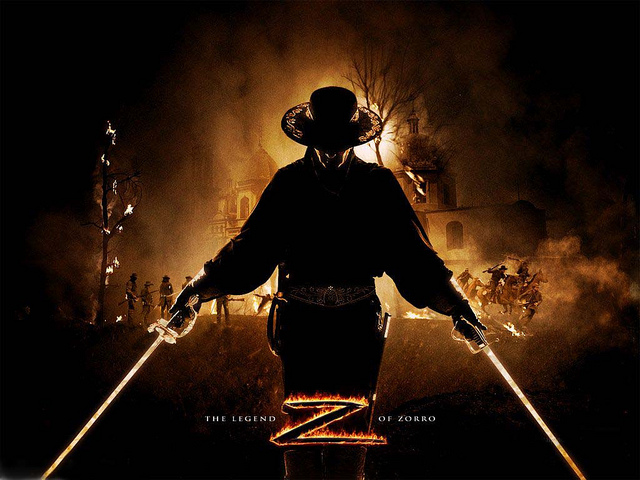
zorro

Or, according to TvTropes: Crouching Moron, Hidden Badass/Rich Idiot with no Day Job

I actually kind of adore this trope, even though it usually involves a lot of silliness and suspension of disbelief. There are three VERY popular examples of this trope: The Scarlet Pimpernel, Zorro, and Batman.

You have a rich, useless, ne’er-do-well on the surface who is actually an honorable hero when no one’s looking. Many people have pointed out the myriad absurdities involved in this trope, particularly as it pertains to the most modern iteration (Batman), but that doesn’t keep people from loving it.

The main elements are as follows:

-Hero pretends to be stupid/foppish/idiotic

-Hero is a member of the aristocracy/upper class/super-rich what-have-you

-Hero uses his public identity and wealth to obscure the fact that…

-He is secretly saving lives and…

-NO ONE CAN EVER KNOW

There is a divergence, however, and an irony. In the case of Zorro, Don Diego De La Vega is a nobleman, but the people towards whom he directs his heroics are the oppressed underclass. In the case of the Scarlet Pimpernel, Percy’s objects of heroism are the endangered aristocrats of France during the point where the Revolution was about to completely lose its mind and start killing everybody off.

And Batman, that strange creature, is a standard crime-fighter BUT, depending on which version of him you follow, he also kind of lands in Scarlet Pimpernel territory. In the Dark Knight trilogy he is often found rescuing the wealthy and “the establishment” from an angry “underclass” mob, albeit an angry “underclass” that is being motivated and manipulated by sundry villains with aims entirely unrelated to economic inequalities. Or he is fighting a chaos-loving clown who tries to pit various groups of citizens against each other for fun. Either way, there’s a lot of  social division and social analysis going on and Batman’s role in it all is…peculiar. So. Make of that what you will. Gotham is super weird.

For these Everlasting Trope posts, I usually do a “what works/what doesn’t” division but since, as I mentioned, this trope inherently requires us to accept some nonsense at the outset, I’m just going to go with WHY this trope is beloved, using these three iconic characters.

The Scarlet Pimpernel:

First off, this is the movie version you want to watch. The main actor clearly takes cues from the 1934 version, but he improves on it, in my humble opinion.

For those unfamiliar with the story (for shame! Go forth and either read or watch!) Sir Percivel Blakeney is a wealthy English aristocrat married to a French actress, named Marguerite, who kinda accidentally got an French aristocrat sent to the guillotine whilst she was seeking her vengeance. Percival is a foolish fop and secretly disdains his wife for this somewhat unintended action. Also secretly, he is The Scarlet Pimpernel, who goes about rescuing French aristocrats from the guillotine by using myriad disguises.

What makes this story so fun is that Percy is such a comical idiot when he’s not being a dashing hero. He obsesses over his clothes to the point of absurdity, laughs at his own very stupid jokes, and is generally both dainty and dim-witted. This protects him from suspicion.

On one hand, this is just good comedy. On the other, there is certainly some genuine heroism in sacrificing your own reputation in order to afford yourself the opportunity to do something more important. People like Percy, but they think he is silly and worthless.

So you get this “Let them think me a fool! Let them mock and disdain! I’ll fulfill their every low expectation. And I’ll get away with everything. No one will ever even know of my heroics, and I’ll receive no public accolades. Indeed, I’ll actually make very bad company to anyone intelligent.”

Which leads me to:

Batman:

At the end of the Dark Knight, Batman gives that voiceover speech where he talks about how he’ll be the villain the people need so that hope can stay alive. He’s already sacrificed his public reputation (like Percy) to be that of a aimless playboy, but now he has even sacrificed his secret identity’s reputation, just because he believes it will help the city improve.

But what is the broad appeal of Batman in a world of superheroes? I mean, isn’t he just a rich guy with a lot of toys and a strong vigilante streak born out of childhood trauma. Why is he such an enduring character?

I’m not 100% sure, actually, but I have a couple of ideas.

One: he’s not super-powered. Despite his wealth, and tools, and gadgets, he is a regular human being who decided to use his status and money to save his city. (Does he succeed? Gotham never seems to get any better. But he tries.)

Two: Gotham is messed up. It is desperately corrupt and crime-ridden, seemingly beyond repair. The system isn’t working. At all. Like Percy, Like Zorro, Batman isn’t fighting criminals–at least, not all the time, though he does that too. He’s fighting to get the right thing done in a city where entrenched corruption makes the right thing almost impossible to even attempt. That’s why sacrificing his reputation to Harvey Dent (yes I’m using the Dark Knight trilogy almost exclusively for this analysis) was so important to him. It was about restoring faith in the system so that people could have a little breathing room to so much as try and do the right thing, instead of giving up. If any city could endure a vigilante, it’s Gotham, ’cause nobody else is even trying. They’re all on the take.

Last, but not least,

Zorro:

This one’s easy.

Swordplay!

Daring-do!

The swashing of buckles!

Come on, this one’s just plain fun. And just like with Percy, the adversaries are the officials in charge. They’re just no good, and Zorro must thwart the Alcalde’s (or the Captain’s or the Don’s or the Governor’s) vicious will.

The big excitement here, and the reason I love Zorro so much, are those moments when his secret identity is most threatened. If Batman’s identity were known, he’d be able to make it work, I bet. Either way, a lot of people know about it already. If Percy were discovered, well, he’s not French anyway. They have no authority over him.

But if Zorro is discovered, he goes to jail, and being a Don doesn’t get him out of it. The Alcalde or evil Captain or whoever really does have absolute authority over him in a way that the super-corrupt Gotham legal system and the hyper-bloody French revolutionary government DON’T have authority over our other heroes.

Zorro is usually set in a specific community and he seems to be an intimate part of that community in most iterations of the character. He’s not just saving “people” broadly, as the others are, he’s taking care of his people, his personal community. Whereas Gotham is millions, and French aristocrats are simply ‘peers’ by station, Zorro always seemed to be more deeply connected to either Mexican California or Spanish California (depending on the version) and to the land and to the regular people. It makes the stakes feel higher, should he be revealed.

Zorro is easily my favorite of the three and I think that is because he embodies the best elements of the trope.

-He plays the foolish fop and sacrifices his public reputation.

-He never gets praised for what he does, and can’t even win over his lady love because she loves his alter-ego, not him.

-The setting and premise lend plenty of room for both gravity and comedy

-He’s an otherwise regular guy who uses his wealth, status, and skills to help those who are being oppressed

-He defies corrupt officials, though he usually settles for mocking them rather than harming them

-Swash-buckling good fun!

-Connected to the community

That last one is purely my analysis, but it’s something I love in any story. It’s all very well to be saving humankind and what-not, but can you help your next-door neighbor? Or the people in your immediate vicinity that you do and don’t like? The fools and geniuses that annoy and charm you on a daily basis? Now we’re talking.

Tried by Time

You know that kid’s song “Make new friends, but keep the old, one is silver and the other gold”?

I remember it from Wee Sing in Sillyville, but never mind that. I was thinking about this song recently based on a combination of my personal reading experiences and a few posts I saw about challenging oneself literarily, so as to be wise and informed, and not beholden to the ever-shifting sands of what’s popular right now.

The posts I saw recommended reading, not just anything, but old works. Old, older, oldest. As much as you can. Not just Classics, specifically, but just anything that’s still around after some decades or centuries, even millennia.

Now I know the charges that can be leveled against such a recommendation.

-older works are insufficiently representative of the diversity of our current society

-only a certain class of people had the ability to write in centuries past, so the perspective is narrow, and prejudiced.

-“old, white dudes” ect. ect.

So, first off, it is thrilling that in literature, as in music and many other arts, we have SO MUCH more available to us than ever before. More literature in translation, more types of stories, more everything, really. And many people these days have opportunities to be published that might not have had in years or centuries past. This is wonderful.

But it is a wonder accompanied by a problem. For one, when we have so much available, it can be difficult to sift through and find that which is of quality, and we’ll never get to the end of our to-read lists, for they are an increasingly unscaleable mountain. But, far more importantly, even the most amazing book that might be published today cannot claim that it has been tested by time.

Time may show something brilliant, even transcendent. Time may show it to be the best of its kind.

But Time has not yet had its chance to wear it down to its core value, to prove its worth. I’ve noticed that people sometimes have the tendency to assume that Classics are Classics just because someone else decided that, and now we’re all forced to play along. And, yes, sometimes you’ll pick up a Classic and set it down wondering WHY DOES ANYONE LOVE THIS? Why is this considered ‘required reading?’

I did that with Nicholas Nickleby. I loved A Tale of Two Cities and moderately liked David Copperfield, so I decided to carry on down the Dickens road. 200 some pages into Nicholas Nickleby I was so irritated by all the outright caricatures, the obnoxious exaggerations of behavior, I just shut the book and haven’t picked it up since, which is a pity, because there was some real laugh-out-loud humor in there too.

I thought Beowulf was awesome, but that the Odyssey was dull as bones (though I strongly suspect that was due to the particular translation we used. Translations matter).

Jane Austen holds up, obviously, being so universally beloved that there are a zillion iterations of her stories (including a Tamil Sense and Sensibility movie!).

Some people LOVE Catcher in the Rye. Some people HATE it. (Confession: I have never read it and I don’t really want to. Just hearing about Holden Caufield makes me cringe, I don’t know why.)

I love Jane Eyre, but darned if I don’t skip the St. John Rivers part every time I read.

I love Ivanhoe, but Sir Walter Scott was often mocked in his own day for his melodramatic style and for over-romanticizing the era of chivalry.

Not every book is for everyone, but the principle of giving time a hefty vote in the process of determining value often works to help us see strength and beauty and, well, timelessness. People still admire Gothic architecture and ancient Cathedrals. People long to go see the Taj Mahal and the Pyramids and Angkor Wat. Some of the old Mosques in Cairo took my breath away. So maybe people watch some daytime special about “Celebrity Mansions” or whatever (I’m 99% sure there’s a show like that) and that’s interesting and popular and fun–and that’s just fine–but I highly doubt that people will be touring them 100 or 500 years from now. Maybe I’m wrong, but that’s my guess.

Good recipes get handed down, generation to generation, not only because of flavor, and rarely because of presentation, but because of nourishment.

A beautiful painting will usually be recognized as such long after the artist dies, because something leaps at us beyond the stylistic trends of the given era.

And a good book will often survive a flash of popularity (or even a slow start) to grow roots in the culture.

Only time tells what burns long and what flares out.

But, wait, Shakespeare himself was popular and “ultra-modern” in his day, you say? Yes, yes he was, of course. Enormously so, as were most of the others who have now become famous for their Classic works. But popularity itself does not justify a work, as we all know. It may or may not accompany quality. I mean, did you know that the movie The Princess Bride didn’t do very well at the box office? Yet it is praised and beloved more and more as time goes on.

I bring this up simply because I recently read a (newly published) book which I quite liked. I read through it quickly, and found the premise interesting and the writing good, and…that is all. I burned through it like a match. The story ended and required no further contemplation. It required nothing of me at all, actually, during or after. It was not an intentionally fluffy or light book, either. It was a serious, sad action-and-adventure work. I still liked it, mind you. If someone was looking for a quick, engrossing read, I would hand it to them and let them know I enjoyed it. But it left nothing in its wake.

Contrast that to the other book I’ve been reading at the same time, The Brothers Karamazov. I’m going through it scant pages at a time. I have no idea what’s going on–the plot and characters are still coalescing in my mind, slowly, slowly–and, frankly, I’m a little unsure what it’s all about. But I have hunted about the house to find a pen so I can underline powerful passages. It has made me think. It has made me curious. I already feel that it has opened up a new world (pre-communist Russia) to me.

Maybe I’ll get to the end and find it wasn’t all it’s cracked up to be, but I suspect not.

Now this may seem curious advice for a writer who is herself seeking publication in this day and age. Why would I recommend seeking older works, when my own work does not fit that category?

Well, first off, I’m not swearing off contemporary literature! I just think I need to adjust the ratio so that I get a lot more older literature in than I have been. Secondly, I still think that no matter how I may love my own work, time will still have to prove its value. I’m sure I, like most authors, would rather have a book that lasts than one that is wildly popular for a mere moment.

One way I sift for modern works is that I just…sit on it. I see buzz about a book and then I just wait. Yes, sometimes I’ll opt to get a book when it is very, very new (and I know that this is what any author would hope for us to do!) but sometimes I just let the dust of hype settle first, and see what’s left. If the book keeps resurfacing in the mouths of trusted sources, and keeps crawling back into people’s minds…maybe it has staying power. I have found hype to portend disappointment much of the time.

So, of course, make new friends–read new books!–but keep the old. They didn’t survive wars and famine and massive social upheaval for nothing!

Now for the practical application. These range from several decades old to several centuries. Some of the books below I have read, many are on my to-read list.

If reading older books has you leery, because you think you will be bored:

Red Badge of Courage (my husband recommended this one)

Treasure Island

Catch-22

Brave New World

Peter Pan (such a childish fun humor here)

A Tale of Two Cities

Chronicles of Narnia

Romeo and Juliet

Frankenstein

If reading older books has you leery because you feel you will be not be able to find authors of more various backgrounds:

Alexandre Dumas

Frederick Douglass

Phyllis Wheatley

Langston Hughes

Sun Tzu

Gabriel Garcia Marquez

Naguib Mahfooz

Isabel Allende

Ihsan Abd Al-Qadus (for Arabic readers, I have not yet seen him in translation. I’ve only read بئر الحرمان)

Amos Oz (A Tale of Love and Darkness)

Chaim Potok (The Chosen, particularly)

Luo Guanzhong, Romance of the Three Kingdoms. (I’ve seen around, comes highly recommended)

I’m sure there are many, many more…indeed, whosoever comes by, feel free to add to the list. A few of those are obviously a little more contemporary, but the idea is that something has had several decades, at least, to marinate and prove its savor.

If you don’t care either way, but just want some recommendations:

Fiction:

Anne of Green Gables, by L.M. Montgomery (all of them)

The Wall, by John Hersey

Persuasion (my favorite Jane Austen)

Jane Eyre

Mara Daughter of the Nile, by Eloise Jarvis McGraw

Exodus, by Leon Uris

The King’s Fifth, by Scott O’dell

Ivanhoe, by Sir Walter Scott

Non-Fiction:

The Abolition of Man, by C.S. Lewis (Also, everything by C.S. Lewis)

Heretics, by G.K. Chesterton (and Orthodoxy)

Pensees, by Blaise Pascal

The Prophets, by Abraham Joshua Heschel (or Man is not Alone)

So, as you can see, I’ve not really delved into that many older works, and I’ve got a long way to go. I want to seek not only the silver, but the tried and tested gold.

War and the Military in Fantasy: Part 2

Herein reside a few scattered thoughts on war and the military in fantasy. For part 1 of this, see here.

I think I tend to be just a little pickier about how war/battle/military matters are presented in fantasy novels. Honestly, I’m a bit of a stick in the mud.

“That doesn’t make any sense. It doesn’t work like that.”

“That would never happen. Unless all the commanders were idiots.”

“That is a terrible training principle. You would never get a good army that way. Way to kill off all your good people for absolutely no reason.”

“It’s clear this author has never been closer to anything military than youtube videos and wikipedia pages.”

And so on…you get the idea. Of course, much of this is tricky. First of all, even my own military experience is just one type of experience (modern military, USMC, Iraq-specific, linguist) and also, well, this is just fantasy, right? Asking it to be realistic is kinda silly, isn’t it?

Well, yes and no. Certainly, it depends on the kind of fantasy, and other various factors. But some things have to be coherent. Some things have to make sense. It has to work meaningfully in-world, and it has to have some resonance for the real world. If you’re talking war and violence, and it provides a mere video game feeling for the reader, then it’s coming up quite short. Especially for a reader like me, or anyone else with any range of military/combat experience.

So I’m going to throw out a few styles and categories of fantasy fighting, and then–grain–of-salt-alert!–I’m going to give my own two cents on what I think works good, better, best.

The Magical Spectrum

There are a lot of different ways authors include magic in their combat. Here are a few very broad-stroke types:

All Magic: (Harry Potter, X-men, Mistborn) All fighting is magic, therefore combat is totally dependent upon the magic system. Throwing a punch or using a gun would be out of the norm, or pointless. Magic is inextricable from essentially ALL major events.

Half-Magic: Some heroes have a form of magic/power, but it is not always the main way to achieve their goals. Hand-to-hand, sword-to-sword is sometimes the only way out of a situation, and a magical showdown usually only happens between the good guy and the “big bad.” (Robin McKinley’s The Blue Sword and the Hero and the Crown, NK Jemisin’s The Fifth Season…sort of.) This category can sometimes bleed into the next one.

Atmospheric Magic: The world has real magic and there are great supernatural powers influencing events, but the actual army-to-army battles are usually taking place between regular (un-magic) soldiers. (Lord of the Rings, Star Wars, and, again, The Blue Sword)

Garnish Magic: There are some vague supernatural elements, but they are so subtle they barely grace the page, and are not engaged with, day-to-day, by either heroes or secondary characters. (Guy Gavriel Kaye’s The Lions of Al-Rassan)

No Magic: Low fantasy, where the world is invented–is not our world at all–but physics, capabilities et. al. follow Earth standard: The Winner’s Kiss series, Tales of the Kingdom series,*.

Each of these–and all sundry permutations–will require a slightly different approach to the way magic affects combat, if it does so at all. But there are some things that are usually going to work well or poorly regardless of the quantity or pervasiveness of supernatural elements.

What I don’t Like:

If combat is described to look like Crouching Tiger Hidden Dragon but without any in-story justification, this bothers me immensely. A character is non-magic, but is hopping up and kicking people in the neck like a video game character? Unless they are literally Jackie Chan or Gina Carano–even then!–there has to be some realism to the fight. No one is jumping five feet into the air, and doing a million fancy whirls and twirls unless it’s straight up wuxia, the Matrix, or there is a magical explanation. And, mind you, if there is a magical explanation that can make the combat action a little dull. If everyone can do everything, where’s the stakes? Where’s the danger?

-If there is a Deus Ex Machina, though I’m sure that goes without saying. It’s used a lot more often that you’d think, considering that it’s broadly viewed as kind of a cheat. Bad guys having a slight change of heart at the last second. The character nobody liked anyway sacrificing themselves so that no main characters die. Hyper-convenient interruptions/interventions when, otherwise all would have fallen to disrepair. The perfect heretofore unmentioned spell that fixes everything. A sudden discovery of unique powers at just the right moment. Ironically, the only time I actually like the Deus Ex Machina is if it’s been well and meticulously foreshadowed (in which case it barely qualifies for the title) OR if it is a literal Deus situation, i.e. there is a deity who actually interacts meaningfully in the story. Even then, it’s gotta be done just right.

-This one drives me bonkers: the Captain/Leader who has to do everything himself (aka Kirk and Spock). Narratives that follow exclusively one character fall prey to this especially (I’m looking at you Harry Potter) because they kinda can’t help it. They have to involve the main character in every little detail.

This is exactly the opposite of how this works in real life. Indeed the Captain often has to stay back, or at least keep to a location where communication is possible with all elements of the team/group/army. Leaders have to oversee. They have to maintain continuity of the mission, not get bogged down in every detail–even when that detail is the combat action. A Captain who does everything himself isn’t humble, he’s a control freak. A Captain who can’t let subordinates take charge of the action is a micro-manager and that is the worst kind of leader. Nothing will ever get done.

The Captain is a rebellious hot-head: I mean, this is allowed. It happens. Some people are rebellious hot-heads in real life. But when the narrative treats this as a good quality, as if ignoring superiors and tactical planning is somehow an asset? Not great. There are times and places for that, but they are not manifold. The ability to listen to others, to act calmly, and to stick to a plan…this is all usually the good stuff. Rebelliousness is only rarely useful, believe it or not. It’s not great for team-work, or general efficacy. We think “rebellious” and somehow think that means “good guys” but the most successful resistance movements were organized, disciplined, and you better believe that they listened to the plan and stuck to it, because it was life or death not to.

Rank is irrelevant or mocked. No. Rank matters. I get it, though. It grates against our love for equality. Who says that the General over there is worth listening to? Who says that the Sergeant gets to choose? Why can’t I just yell at the Captain in charge of me when she says something stupid (aka something I don’t like)? Doesn’t it make my character awesome and tough to ignore rank structure?

Military rank structure, despite some of its origins, is not the same thing as aristocratic rank structure. Yeah, it’s not perfect, and sometimes idiots get put in charge just because they’ve managed to achieve a certain rank, but rank isn’t always a meaningless hierarchy and it usually isn’t heroic to ignore it.

The point of rank is not to say some people have more or less value, but that each person has a different and distinct responsibility. In modern militaries, rank is achieved–in varying degrees–by such factors as education, time in grade, physical fitness, proficiency in your particular job field, and your general performance in any and all assigned tasks. It’s a flawed system, but that doesn’t make it meaningless. Your civilians can chafe against a rigid structure all they like, but military people are going to be a little bit more accepting of such structure because it (usually) serves a purpose.

-When you can tell it looks great in the mind’s eye, but just doesn’t translate to the page. This kind of goes back to all the whirling and twirling and high-kicks mentioned above. If I were to describe a Jackie Chan action scene move-for-move (Yes, I really like Jackie Chan) it would be unlikely, if not impossible, for me to take all that complex kinetic energy and make it as heart-pounding and clever on the page. Not because this kind of action is bad–I love this kind of action–but because it begs to be seen, not described. Prolonged, complicated move-by-move action scenes usually result in a blurred understanding of the given battle. This can apply on the large scale as well. Tactics are important, but you can get lost in the weeds.

What I do like:

When pain is actually present, influential and (painfully) communicated on the page. Whether there is magic or not, if the character has taken quite a few hits, but they go on with only passing mention of “aches and bruises” then I don’t believe it. But if I’m sucking breath in through my teeth when you describe their wound, and I can feel their absolute, utter exhaustion as they try to carry on, that’s awesome. I love that. It gives the battle meaning.

When logistics are taken into account. Watering and victualing large armies is NOT easy. Even a small band is going to have a tough time feeding themselves short of extorting goods out of on innocent villagers (which, by the way, is what almost all armies used to do back in the day). Good guys, bad guys, or grey guys, the stuff has to come from somewhere. And most likely, even if the characters are angels, its going to come at someone’s expense. Sometimes the hardest part of war is food and weather.

Je ne se quoi of action: I know that it’s not helpful to say that, but sometimes the action just flows, gets the heart beating. It can be magical or non-magical, but it has to make you just a bit nervous. If it’s just “kick, punch, fly though the air, ball of fire, magical lightning, punch, punch, blood, guts”…my eyes glaze. There is a way, and I myself am trying to put my finger on it. I can see it when I write it, and I can tell when it’s missing from my writing. It’s that feeling that you really don’t know how the fight is going to end. So, every move matters. Every breath matters. Or it’s not that you don’t know how the fight will end, but that you don’t know at what cost. Or it’s just a really clever, visceral, I’ve-actually-experienced-this way of describing the action. I’m not sure. Hence, je ne se quoi.

(For instance, I was reading the book Unbroken, which is a true story, and where you know from the first word that the man (a POW during WWII) does indeed survive. Yet every little move mattered. Yes, mostly because it was a true story, but also because it depicted that survival so painfully and vividly.)

When magic is treated like any other weapon of battle, not a solve-all, but a tool with distinct advantages and disadvantages. I like it when the magic has weaknesses and consequences. The more of them, the better. For instance, when it weakens the user to the point of incapacitation, and they can’t even defend themselves against natural dangers (knives, swords, arrows). Or where you have to give up something you deeply value in order for the magic to be effective. Or, if the magic is used wrongly, it comes back on the user’s head in a dangerous way.

-Shows or even concentrates on the civilian side of things. I mean, what are you even fighting for? If you only ever show the fight, then it’s often just spectacle. What on earth are you fighting for? The country? A belief? A family? A ruler? And not just what are you fighting against, because that part is usually easier to depict. It’s the “for” that’s challenging. I rarely see it done well, because it can distract so much from the action. But, sometimes, that’s a good thing. There can’t just be an against. Showing the thing that’s worth saving–and not just for two seconds–can make all the difference in whether anyone cares who wins. It doesn’t even have to be something angelic and perfect, but it has to be something we can understand.

*Originally I had the Queen’s Thief series in the Low Fantasy category, but that was my misperception. I am reading the first book currently, and it seemed low fantasy to me at first, but turns out it’s not quite that.

Things Beloved: Fiddler on the Roof

My not-yet-two-year-old asked for me to put on some music, a word he pronounces suspiciously like “magic,” by the way. Instead of putting on the same album that I always do because he likes it so much (Dear Wormwood by The Oh Hellos), I decided it had been too long since I’d listened to Fiddler on the Roof.

This was the album I used to play when my son was still an infant and I would nurse him–we had a really rough time nursing those first several weeks and if he nursed for a good portion of the 11 minute intro song (“Tradition” plus that awesome violin solo), I felt like we were in decent shape.

My husband watched the movie for the first time two years ago, even though he’s not really into musicals. He did it on my behalf, because it is one of my all time favorite movies. It’s one of those that always feels fresh to me, always rich, always compelling.

So I just want to talk about some of what makes this a great musical, and a great story.

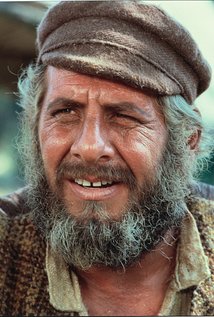
-First off, Topol. This guy can emote and evoke like no other actor I’ve ever seen (Denzel Washington is a good equivalent maybe? It’s something about the rich inflection in the voice and depth in the eyes) If you ever want to see this phenomenal actor in another setting, I recommend watching Sallah Shabati, an Israeli movie about a Mizrakhi family making Aliyah to Israel, shenanigans ensue. It’s more of a comedy, but certainly worth a watch.

topol

He has a sort of…comedic gravity, or sober smiling. It just makes every last word he says and sings feel real. I mean, even when he’s singing this somewhat absurd song “If I were a Rich Man,” he gets this joke out about being able to say whatever he likes, because people assume that rich people know everything, and then he goes to this almost tear-filled thought about how if he were rich he’d be able to study the Torah all day long, and that would be the sweetest thing of all.

-Secondly: Tension. And not just tension, but the ability to make you feel a cultural conflict that might not even be your own, or anywhere near your personal experience.

The most powerful instance is during the L’Chaim scene, where Tevye and Lazer-wolf are drinking joyfully about their agreement for Lazer-wolf to marry Tevye’s daughter Tzeitel. All the Jewish men are having a big raucous celebration and then…the music changes. In traditional musical vocabulary it would not be a negative change at all–it’s not the steretypical music of impeding doom in any way–but in this case, it is. The music changes from having a Yiddish/Hebraic feel to feeling purely Russian. In just that slight tonal shift, you feel the Russians coming into the room and tightening the atmosphere. Nothing bad has happened, no one is doing anything to anyone…but they could, and in little ways, the story has let you know that underlying danger. The Russians could hurt someone, cause trouble, ruin the joyful event.

They don’t. This time. They join in the celebration. Everyone slowly relaxes, and this time, the Jewish community and the Russian community sing together.

But that tension when they first come into the room, bursting in on the scene with no ill will whatsoever, but with such unspoken capacity to do harm. I don’t even have to watch the movie to feel that tension. Sometimes when I listen just to the soundtrack, I almost suck in my breath when that break/change in the music comes. I feel like Tevye, standing still, not making a move, waiting to see what direction this intrusion will take.

You do not have to be in a Jewish village late 1800s Russia during an era of pogroms to recognize and react to the imbalance of power and the platform for cruelty and oppression. And since you are seated firmly in Tevye’s perspective (and because Topol is FANTASTIC) you feel everything to the roots of your teeth.

-Another example of how this movie puts you in shoes that may not be quite yours: When Chava announces that she’s going to marry the Russian guy (I have never managed to remember his name, for some reason) you (or at least I) feel exactly like Tevye, even if you might not have the same beliefs or restrictions in real life. This is too far. For a daughter to matchmake herself with a good Jewish tailor? Okay, I can deal with that. It’s only one step outside of tradition. For a daughter to marry a rather secular and radical Jewish man, and leave her home to go into danger? A hard thing, on one hand, but “on the other hand” a thing that can be understood and respected.

But for a daughter to marry outside of the faith? To marry ‘the oppressor’? No. “There is no other hand!” And even if you, perhaps, think he’s being unfair with your modern day sensibilities, you are so deeply engaged in his experiences and beliefs, that you feel his breaking point. When he walks her away, waving his hands wildly, he is taking his last stand against all the things that are trying to knock him off the roof, so to speak.

The music is beautiful, the story is powerful, the humor is sweet and grave. This is a wonderful, well-told story. I aspire to be able to write the brilliant, ever-so-subtle moments of struggle and tension that seem so effortless and perfect in this story.

Hometown Lessons

So we just got back from an extended stay with family in our hometown over Christmas and New Years. It was wonderful. The kids got to play with Grandparents and Uncles and Aunts galore, and we got to just relax at our old stomping grounds. My husband and I are from the same city, so it makes holidays very easy for us.

Anyhow, this seems like an opportune time to write down something I’ve been musing on for a while. Hometowns (or Home Cities, or Home Countries).

The city in which I was born and raised is not a fancy, enormous, or famous city. You’ll likely not go there to sightsee or vacation. Nor is it a quaint small town with a quirky librarian and town troubadour.

So. Not the Big Apple. Not Star’s Hollow.

And, in all fairness, I haven’t even lived in my home city except for scattered months here and there since I was 18 years old. I joined the Marine Corps, then used my GI Bill to go to University in DC, then married right back into the military, and we hop about the country.

However, both my parents and my husband’s parents, and a good number of our relatives all live there, so we visit as often as we can.

I would not try to convince others that they must love my medium-small city. I would not try to convince you that it would impress or amaze. But I will tell you why it is possible for me to feel the same affection for my hometown as, say, a native NYC’er feels about their hometown. It’s all about what makes us love a place. A real place. Or–to provide a writing application–a fictional place. It’s about how a place can make its way into the bloodstream, despite being rather ordinary.

So, in no particular order, why people love a hometown:

  1. I know people and people know me. Sounds simple, right? But in the military you move every 2-3 years and it can be hard to cultivate a community of friends and get to know your neighbors very well. In my hometown (which is not a town, remember, but a city) I run into people from high-school, or kids I used to babysit, or friends of my parents all the time. At Barnes & Noble. At Pei Wei. At the coffee shop. At the bakery. I love that I know the owners of that bakery and can chat with them while I peruse their fine wares. I love these people. We actually know and care about each other. Familiarity almost unto family-ness. It’s very cozy, and makes even a city of moderate size feel just a bit like a small town. So how does this work in fiction? The characters have to be real and warm and familiar, having their own complex lives, no matter how peripheral to the plot. They have to feel like someone you’d be glad to run into, or at least very interested.
  2. I don’t have to use GPS everywhere I go when I’m home. I know the roads and highways reasonably well and unless there is ridiculous, incessant, obnoxious construction on the main roads (which, yes, there often is), I can just get in the car and go to a place without having trouble picturing where I’m going. In my parents’ neighborhood, I can just walk to any number of places. Fictional application? The location is clear in the head of the reader. It’s not just a haze of walls and roads. There are recognizable signposts, and texture that comforts. For the writer, it has to exist clearly in your head first, but be described simply and in comfortable passing until it becomes like that gas station you see every day on your way to work.
  3. Even with people I don’t know personally or very intimately, there is a ‘sharedness.’ I can lament alongside someone I just met about how I also had an impression growing up that this one school district was ‘the snobby one,’ even though I knew nothing of it but stereotype. We can share in our frustration about that two-year-long road closure that makes getting downtown take 5 or 10 minutes longer. And wasn’t it sad when they closed down that one shop? I liked that shop. We may not know each other, but we know our city and its culture. We have that shared ground to walk on, if nothing else. We may meet but once, and know nothing about one another’s lives, however we meet our city every day. We have a mutual friend, as it were. In fiction, if your world, or city, or terrain is really well-fleshed out, not everything will be a mystery. There will be shared knowledge among local characters. This is why one character is often an outsider, because it gives the writer an opportunity to introduce everything from scratch. But its good to remember that sometimes people assume others know what they know about their terrain, because it’s all they know. In an era without planes or trains, everyone would know their local area very, very well. Every rock and shrub.
  4. Let’s call this the “Cubs fan principle,” (despite my general lack of sports knowledge): Recent miracles notwithstanding, I don’t think a Cubs fan remains a Cubs fan because the team itself is observably the best thing ever. People are fans because they grew up fans and they’ve become entrenched. At that point it doesn’t matter if the thing they love is the best, shiniest one of its kind, or the most worn-out, half-functioning one of its kind. You love it because its yours and its yours because you love it. Reason does not always enter the picture. So, in fiction, it’s understandable if a protagonist wants to get out of their small town, but unless their association is 100% negative, there is going to be some native affection for the place. Some inexplicable draw, in spite of everything. Because sometimes, you just love what’s yours, even if what’s yours isn’t all that great in the eyes of an outsider.
  5. Most places, even seemingly dull places, have something that is striking to the eye or heart. Oklahoma does not have the most dramatic landscapes, but its sunsets can leave you breathless. My hometown does not have the most dramatic architecture, but the old pedestrian bridge that use to be a railway track, is a pure joy to walk on, gazing over the river. Downtown may not host international attractions, but it has its beauties, its quirks, its joyful holes-in-the-wall. There is no place in all the world, I don’t think, that is all blandness and dullness. The open eye and adventurous spirit can find something beautiful anywhere. Our invented worlds may be bleak, or rough, or simple, or whatever, but let us not ever think there is nothing left to draw the eye, or stir the spirit. No place (and no person, for that matter) is to be dismissed as not worth our time and observation. There is something, somewhere that can root us, and cause us to be invested.

So now I’m back home (not hometown) and trying to find ways to enjoy and invest in where I am right now. It’s work, to know and love a new place.