Year in Review

It seems to be expected that one should complain and lament this entire last year. I have neither the desire nor the right to do so. If I were to complain–even about the legitimately discouraging events of the year–I would feel as though I were looking down on the truly good things that have happened and tossing the literal baby out with the bathwater because, chief among this year’s review:

  1. We had a baby. Our second. His daddy is holding him right now, while our eldest plays with a alphabet train one of his Grandma’s got him. I had a smooth labor and uncomplicated delivery (don’t get me wrong, it still resides in its own very unique category of difficulty and pain) and he is healthy and happy and seems to want to talk as soon as possible. He’s not yet two months old, but he’s all about it.
  2. Our oldest is nearing two years, and he is bursting with personality (also very talkative) and is shedding his babyhood for toddlerhood day by day. I am fascinated by him as he grows.
  3. We went to two weddings this year. One was my brother’s, bringing a wonderful new sister into the family, and the other was that of a dear, dear friend (one who will pretty much own the acknowledgments page of my book if it gets published). Both were joyful celebrations and opportunities to see family and friends that we rarely get to see.
  4. I spent 4 months in my hometown with family this year due to my husband’s travel schedule. This was both good and bad. I missed him, both for myself and on behalf of my son. But I got to spend quality time with family and in my hometown (city, really), which is always a joy.
  5.  I did two rounds of revisions with my agent. It’s so hard entrusting your work to other hands, but when I got over my initial resistance and got down to the work, I was certainly grateful to her (I suppose that ought to go without saying, but you live, you learn). The suggestions can be daunting, and the work of them as well, but it’s good stuff, all told.
  6. I read 20 books this year, and I liked quite a few of them. 20 doesn’t seem like many, in the grand scheme of things, but it was actually a good number for me considering all else that was going on. I’ll list them all here, and give some notes on some of them.

Books of 2016

I read a lot of SFF this year. Normally it’s more of a mixed bag, but this year was the year of fantasy for me, apparently.

  1. The Fifth Season, by N.K. Jemisin. This book was complicated for me. Great writing, and some of the best world-building I’ve ever seen, but left me feeling hollow and frustrated due to other aspects of the book.
  2. Sorcerer to the Crown, by Zen Cho. Enjoyed this. Fun. Clever. Solid, quick read. Like a fantasy Jane Austen
  3. Mistborn, by Brandon Sanderson. 
  4. Throne of the Crescent Moon, by Saladin Ahmad. Loved the setting.
  5. The Golem and the Jinni, by Helene Wecker. Brilliant “Ellis-Island-era-immigrant-fantasy” story.
  6. A Criminal Magic, by Lee Kelly.
  7. The Grace of Kings, by Ken Liu. A few special scenes in this book were particularly powerful.
  8. A Wizard of Earthsea, by Ursula K. LeGuin. A solid, old-school fantasy with good themes and an interesting world.
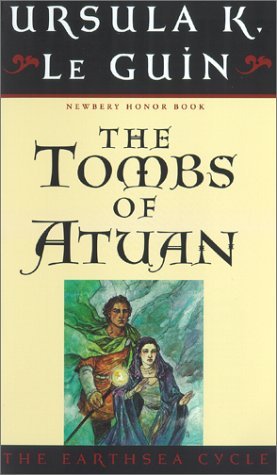
  9. Tombs of Atuan, by Ursula K. LeGuin. My favorite of the three Earthsea cycle books I read
  10. The Farthest Shore, by Ursula K. LeGuin. Powerful at times, but I felt conflicted about the purpose of the themes in this one.
  11. Updraft, by Fran Wilde. Woah, crazy-good world-building here, enjoyable writing. All-around fascinating book about a world where people live in bone towers, high above the clouds, fly on silk wings, and survive by sinister secrets. I had a few minor issues with one of the character arcs, but they were not enough to keep me from flying through this book (ha-ha). I got a really good visceral sense of the wind in my ears and leaping of towers over a sea of night-dark clouds. Oh, and it was clean (no language) which is not something I require, by any means, but something I appreciate. I think the sequel to it is already out, so I may be getting on that soon enough.

So, next up, historical fiction. This is a genre I love, but I didn’t get as much of this year.

  1. Ijaam, by Sinan Antoon. A prison story, told in a confusing mixture of misery, memory, and torture-induced fantasy. Set during the Iran-Iraq war. Very dark, but necessarily so.
  2. Rose Under Fire, by Elizabeth Wein. Set in Ravensbruk, a memoir-style story. Worth the read.
  3. Ben-Hur, by Lew Wallace.
  4. The Ugly American, by William J. Lederer and Eugene Burdick. Anyone interested in U.S. Foreign Policy, and any flaws and failings thereof, should read this book. It’s not perfect, but it is very good.

Sci-Fi, next. Something I don’t read a lot of, but have dipped my toe into lately.

  1. The Red: First Light, by Linda Nagata. Very intriguing.
  2. Mechanical Failure, by Joe Zieja. 

General Fiction

  1. The Napoleon of Notting Hill, by G.K. Chesterton. Weird and confusing, but interesting still.
  2. The Father Brown Omnibus, by G.K. Chesterton. A mixed bag of detective fiction short stories. A few the stories were downright offensive (see: racism of the early 20th century) and those were usually pretty bad in general as well, but I still enjoyed a lot of the others.

And this is shameful, only one non-fiction book this year. I really like non-fiction, but I just didn’t give it the time it deserved. I have several high on the list for next year.

  1. Hillbilly Elegy, by J.D. Vance. Interesting read. It was touted as an inadvertent analysis/explanation for the rise of Trump’s popularity among a certain group of voters, but that’s not really what it is. Those factors of cultural resentment that foment racism and a desire for some powerful government figure to fix all–these are mentioned barely in passing. It’s just a memoir about life in a culture of poverty, low expectations, unstable family, addiction, teen pregnancy, and what it takes to escape that life (at least one, loving stable family member, it seems). He is very critical of the hillbilly/white working class culture of his youth, while still being proud of his family. His experiences are statistically comparable to cultures of poverty regardless of region or race. The book intrigued me because the guy had a few similar tracks to mine. I was raised in a stable, loving home, and I know nothing of Appalachian culture, (at all), but I was from a blue collar family (like him), joined the Marine Corps and deployed during the Iraq war (like he did) and then used my GI Bill to go to an otherwise unattainable private University (he went to Yale for Graduate school, way out of my league, but still). I have a distinct memory of a professor asking a lecture hall full of some 150 students if any of them thought of themselves as blue collar. Maybe four of us raised our hands. I didn’t feel uncomfortable or ostracized or anything, but I knew my life experience was just a bit different than most of my college peers. So…good book, and some interesting thoughts about Appalachian culture and poverty and success.

So here are a few of the books I’m looking forward to reading in 2017:

-Republic of Fear, by Kanan Makiya: About Ba’athist Iraq. I’m actually reading this one right now

-Saddam’s Secrets, by Georges Sada.

-In the Garden of Beasts, by Erik Larson: A portrait of the rise of Nazism in Germany through eyes of the American Ambassador’s family

-The Brothers Karamazov, by Dostoyevsky…I want to enjoy some classics this year as well.

-Eugenics and other Evils, by G.K. Chesterton

-Iraq in Turmoil, by Ali Al-Wardi

There are so many more, but those are just off the top of my head. Happy New Year, and may it be blessed and full of joy!

The Desert is More than Sand

I have lived in/visited a fair variety of climates. I’m from Oklahoma, I lived a while in Virginia, spent a summer working at a clinic in Chiapas, Mexico, and lived in Israel for six months as a Moshav volunteer when I was 17 (Judean Hills area, near Abu Ghosh).

When I was in the Marine Corps, I got tossed from coast to coast, spent a little time in Texas and Georgia, a little while in Egypt, then I was deployed twice to Iraq (with brief passage in Kuwait), and a very short stint in Germany. This doesn’t begin to encompass all possible terrains and climates, but here is one small thing I have noticed in all this:

When people say “the desert” they usually mean one of two things–cowboy-cracked-ground-and-cacti, or endless-dunes-of-sand–and this simply doesn’t cover it.

The desert, ladies and gentlemen, has been somewhat stereotyped. It usually only gets to play two roles: Either the vaguely (but not always very accurately) Middle-Eastern sand waste where the wind blows across your face, or the old western back country where the bandits leave you to die and you hold your canteen over your head but only one taunting drop comes out.

And, yes, both of these types of landscapes are beautiful and fascinating, but I confess to getting a little frustrated when sand or cacti are the only things associated with the desert. This particularly applies to stereotypes about the Middle East and its respective deserts.

So I am going to show a little of the types of deserts that inspired the landscape of my story, because they were the landscapes I loved and was most tied to at the time.

The Judean Desert (Israel):

marsava

(Source)

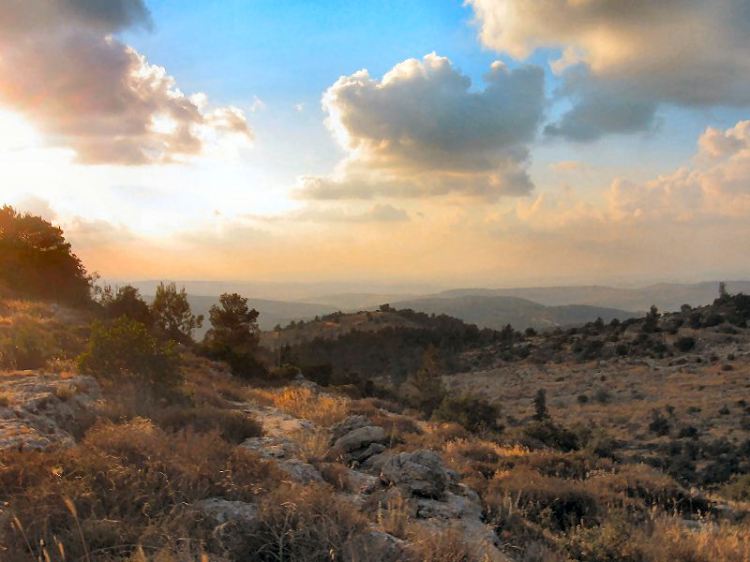
And the Judean Hills (which are scrubby and a bit desert like): This one is a lot like the area where I lived when I was in Israel.

panorama_from_beth_meir_5

(Source)

These regions are more rocky and sharp, but instead of sand, they have dust and even soil. Deserts can grow things, believe it or not. Sometimes very beautiful things.

And, of course, the Negev desert (which technically contains 5 separate climates):

nachalparan1

(Source)

Iraqi desert (this is not my photo. I tried to find one sans military personnel and equipment but those are hard to come by in public domain):

defense-gov_news_photo_071119-f-1936b-052

(Source)

This following one is my photo, from one of my deployments. It is an infamous “Red Day” in Iraq. It is not sand on the ground at all, by the way, but a fine, fine dust (we called it moondust) with a pinkish hue, and as the sun sets, the whole atmosphere turns a thick, choking red-orange. The color in the photo is the actual color of the air–no modifications were made. I don’t even know how to make modifications…

blood-sun

Side-note: Iraq has a wide variety of terrains and climates. Desert and dust is just one region, and not the sum of it. I have lost a lot of my deployment photos, otherwise I would provide pictures of the great ancient Al-Furat (the Euphrates) and riverside sunflowers from a rooftop in West-Central Iraq.

Here’s some lovely Red Rock:

red-desert-rocks

(Source)

This is one of my favorite kinds of desert. Colorful, rugged, and rocky.

Zion National Park:

bighorn_sheep_at_zion_national_park

(Source)

And another one of Zion National Park area that my husband and I took. This area has several “eco-zones” which means it is desert mixed with other eco-zones. It is very unusual for that number of different eco-zones to be all jammed-packed together. We hiked a few days out through the rugged back-wilderness and it felt almost as though we hiked across countries, the terrain changed so many times.

zion-park

And, on that same trip, we caught a glimpse of the Painted Desert:

painted-desert

I have not even got to half of the great and strange deserts of the world…I stuck mostly with those with which I myself am personally familiar, but there is much more to be had!

All this to say, it can be easy to use stereotypes of terrains and climates (as it can be easy to use stereotypes of almost anything or anyone) but it lends visceral beauty and richness to dig deeper, and get some of that local dirt under your nails and in the creases in your hands. Taste the mixed air. Smell the unexpected fragrance on the hot wind. The forest is more than trees, the jungle more than humidity, the prairie more than grass and wind, the mountain more than rocks and snow.

And the desert is so very much more than sand.

The Everlasting Trope: Stable Boy among Kings.

Or (according to TVtropes): Penny among Diamonds

I desperately, inconveniently, and perhaps inexcusably, love this trope. I will be using it a bit more broadly than the tvtropes definition, as you will see, but the basic idea is the same.

The poor lad or lass of low social standing somehow gets involved with the higher social classes–cultural clash ensues. Their social “betters” look down on them and mock them as the hero tries to function in that element of society. They have to try twice as hard to accomplish half as much because the deck is stacked against them.

Since I so dearly love this trope, I will likewise try twice as hard to be objective about its flaws. Just expect a little more gushing on the “good stuff” section. (Also, I’ll admit, this is closely related to this trope that I already explored. A lot of the same issues came up).

The Problems:

  1. Shallow rendering: This is the same as with nearly every trope. If you don’t dig deep and write it thoughtfully, it will fail. The most typical example of a shallow application of this is when there’s the “poor girl” hounded relentlessly by a cartoon-standard “rich mean girl” without any complexity or exploration as to the whys and wherefores. The “rich kids” or nobles, or upper class or whatever–they need to be drawn with precisely the same complexity as our stable-boy/servant girl protaganist. Otherwise the conflict is worthless. (more on this in point 3)
  2. Misdirected rage: This one may be more of a personal pet peeve than anything else, because it can be done well, but I really don’t enjoy this trope when the stable boy character spends ALL his time and energy on raging against the mean-rich-jerk-guy, letting stupid things get under his skin, and basically acts like a flaily, foolish, spoiled brat when his experience (you would think) dictates the opposite. Pride gets hurt? Sure. But obsessing about mean-rich-guy’s insults non-stop? Just straight boring. It’s a time-waster, and if one is trying to get by in a society that views them as inferior, flailing with rage at the drop of a hat is probably the least effective way of proving them wrong. I like to see the character get things done. This is definitely NOT to say that he won’t lose his temper sometimes, or struggle with bitterness, because that’s almost a given, and even a necessity (see point 4).
  3. Mere Illusion: Where the whole trope is just to show how awesome our servant girl main character is. Mean rich girl screeches about her wealth and many fine goods, just to show that our girl isn’t as shallow. Mean rich girl fawns over handsome guy, just to show that our girl catches his attention without any effort. Mean rich girl tries so hard to be beautiful, but our girl just is without ever trying. Mean rich girl wants to be the best at everything, but our girl naturally and effortlessly outstrips her in all fields, from grace to grappling. This isn’t about the real clash of cultures and societal standards, this is about using a setting and characters as window dressing to talk up your main character.
  4. Utter Perfection: Related to the above, where our stable boy is just perfect. Never unkind to anyone. Never struggles with discouragement. They’re just a sweet little angel who everyone else is a jerk to, all the time, for no real reason. He can be a good and honorable person–that’s actually my favorite version of this trope–but he cannot be perfect and perfectly innocent. Hardship and injustice do not bestow moral perfection or innocence. Those situations can–and should–arouse empathy, but should not be inextricably linked to moral superiority. We can all be awful sometimes, even when we’re stuck on the bottom rung and everyone’s being awful to us.

The Good Stuff

Let me crack my knuckles here for a sec. Okay. Here’s where we get personal. I know why I love this trope. Others may share some of my reasons, while some reasons may sound absurd to you. Feel free to take all the following with a grain of salt. I’m also going to be explaining the particular versions that I like.

  1. Handled rage/Cool customer: When our hero is thrust among the rich and famous or social powerhouses, and–whether subtly or overtly–is looked down upon but they just let it roll off of her back. The disparaging treatment rankles and bites–even wounds deeply–but they grit through it and don’t let it hitch their stride. They handle it. They don’t stoop to the occasion. They keep their cool…most of the time. If they keep it most of the time, then really lose it once, it’s WAY more powerful and shows where they draw the line, where their breaking point is. Seeing the breaking point means a lot more if they usually try to keep calm and swallow their pride.
  2. Endurance: It’s hard to make these points distinct, as they are so interrelated. I LOVE to see a character with endurance. Physical endurance. Emotional endurance. Seeing someone who is being hounded at every angle to give up–has every good reason to ‘give up’–but doesn’t. Oh, I live for such characters. Someone who knows they’re at a disadvantage, but doesn’t dwell on it, or scream about it. They just focus and endure, and work through it. Preferably honorably, though that’s not always the case (flaws, remember…those less honorable characters can be fascinating too, though I don’t enjoy them as much).
  3. The Beat-down: Okay, I don’t really know how to understand or justify my own affinity for this aspect of the trope, but usually when there is a character who is the stable boy/servant girl type among the wealthy or powerful–and these are broad terms, there can be lots of aspects to this other than wealth–there comes a point where they endure a brutal beat-down. Physical, verbal, psychological, or a combo of all three. Everything has gone wrong, they are cornered, bruised, bleeding, desperate, despised, bordering on losing all hope, all future, all recourse. No one’s there for them, because they don’t belong to these people and these people never wanted them to begin with.

Maybe they get back up, blood in their teeth, and keep walking through the jeering. Maybe they don’t because they can’t. Maybe someone, at long last, comes through to help them get up. I don’t know. But something about the beat-down–that “Heroic Red Ring of Death”–which is perpetrated directly because of the social clash of “high” and “low” (of whatever variety that may be) strikes something in me. Most often, this is a literal beat-down. A ganged-up beat-down where there is no escape save when the various fists decide they’ve had enough cruel fun. Yeah, inescapability is a huge factor here. It’s not something you can just ignore.

You would never wish this on anyone. If it were to happen to you in real life, you would not feel heroic or epic, I don’t think. Moreover, I doubt that most of us would handle this kind of a situation with the dignity that I find so particularly compelling when it is shown in the character on the page. But I do find it compelling. It jolts something in my heart, and it isn’t just regular empathy, or “feels.” I’m not 100% sure what it is. There’s a ferocity and a resonance. This “beat-down” thing gets me even far outside this ‘pennies among diamonds’ trope. (Watch the movie “Brick” for a good example of that)

I was like this since I was a very little kid. I felt a drum in my chest when I saw these scenarios. I wanted to be that person (to endure it for them?) and I wanted to help them and I was in awe of them.

4. Sparse Tool-kit: This is a basic thing, and surely no surprise. The character with the limited tool-kit is often going to be more interesting than the one with the endless resources. As G.K. Chesterton once said, limited resources are what make the world a beautiful and fascinating place. Every grain matters. Every stroke. Nothing can be taken for granted. Everything by the skin of the teeth. If there’s only one axe, then you better not break it. There’s nothing coming after that.

Examples:

For some reason, I am having trouble coming up with the full list of examples that I wanted to offer–my brain is creaking a bit today–but here are a few, and hopefully I’ll add more later.

The Black Cauldron: Taran is a pig-keeper who is on an adventure with a Princess and a Prince. He feels inferior, and Prince Ellidyr ensures that he feels it constantly. Taran is one of those that respond with irriation and pride, but it works and makes sense in context. The ending is a little too easy (the “I-was-mean-so-now-I-must-sacrifice-myself-so-the-main-characters-can-live trope is NOT my favorite), but the adventure and conflict is good.

The Scorpio Races: Man, this is a gorgeous book. Sean has little, doesn’t own the horse he loves and races with, and all he wants is to work with the water-horses, keep his own, and live his life. He’s controlled by the owner of the horses, and put in a bad way by the man’s son (a somewhat stereotypical “mean rich boy” at first glance, later with viable explanations) but is stoic, and endures. Works hard, doesn’t give up.

Mara, Daughter of the Nile: This one has a beat-down in it, albeit for slightly different reasons than the initial class disparity. Mara was a slave, bought to become a spy, and trapped into becoming a double spy. At the end she is beaten nearly to death because, though she is worthless to the Queen and “nothing but a guttersnipe,” barely deserving of having a name, the whole coup depends on her refusing to give up the key players. And refuse she does.

-(Movie) School Ties: This one may be overly-simplistic and kinda cheesy, and not 100% accurate, but I still love it. Brendan Fraser plays a poor, blue-collar Jewish high school student (1950’s or 1960’s) who gets a football scholarship to a fancy-shmancy (Catholic?) school, because they’re in a bad way, losing all the time. He hides the fact that he is Jewish and, despite his poorer background, is more-or-less accepted by his peers, though one of the boys is jealous of his status (a very young Matt Damon). He feels conflicted about playing football on Yom Kippur. When they find out that he’s Jewish, they very quickly turn on him. He’s a fighter, and doesn’t give up.

At the end, he says to the dean of the school “you used me for football, and I’m going to use you to get into Harvard” and walks off.

There are many more examples–and better ones, I imagine–and I’ll add them as I can.

I don’t even fully understand all the reasons I love this trope, but the above-mentioned at least go part-way to explaining. I love endurance in the face of unkindness and unfairness. I love someone who handles their work with a calm hand, even when that hand they’ve been dealt is worse than everyone else’s.

Wedding Joys and New Family

I once had a pastor say that, if ever he was going to preach on a topic, he could expect to be tested severely on it while he prepared the sermon. Preaching on mercy? He could expect to struggle with feeling unmerciful. Talking about faithfulness? He should expect to find some area in which he was fighting against being faithless.

Don’t worry…if you’re not religious, this still applies, I promise! If I’m going to talk pretty about some virtue or another, I’m going to have to put my money where my mouth is. If I natter on about kindness, and am then oblivious or self-justified when I myself am being impatient or rude to someone, I’m missing my own point.

So recently I have talked a few times about viewing inconvenience as an adventure, and how we should all try to consider small troubles as small adventures. I should have expected to get my comeuppance, right?

I will first acknowledge that none of this was actually that hard, and this is not a complaint, but an explanation.

Here was our recent little “adventure.” My husband, one of my sisters, my two sons and I all drove for nearly a full day (on the amount of sleep one gets with a newborn, remember) to my hometown for the wedding of my second-to-youngest brother. (Luckily the wolf was staying with a friend). We were so excited, but we knew it would be challenging, and a whirlwind, because we were going to have to leave during the reception to travel all through the night to get home in time for my husband’s work in the morning. Also, no guarantees of a good night of sleep…newborn, again.

On the way, we had all the requisite childhood bodily functions, which required changes of diapers and clothes and the use of half our arsenal of wipes. I will spare you further detail.

We spent wonderful time with our families, ate decadently at the rehearsal dinner (which my parents made…my dad in particular loves to cook for events like this) and relished our short time.

Then, on the wedding day, we had to skip kid 1’s nap for wedding photos (he was a champ about it) and then we were joyful at the ceremony. We got to welcome an amazing young woman into our family, and be welcomed into hers, and I am so, so proud of my little brother.

But we had to leave on the early side of the reception, drive through till about 2 am, put the kids to bed, then wake up (on top of nighttime feedings) to get breakfast and for my husband to go to work. Luckily, kid 1 took a LONG nap that day, so I could take care of kid 2 with relative ease.

Wouldn’t have missed it for the world, but I confess I had to brace myself for long drives, scant sleep, and nap-deprived toddler (though, like I mentioned, he was a champ). I didn’t really have quite the right mind–the adventure-seeking mind–until pretty late in the game when we were driving home at midnight and smiling at each other through tiredness.

It was worth it. So, so worth it. And more than that, the moment I thought about considering it an adventure, I realized how blessed we were to actually be able to do any of this at all. We have a car we can drive across several states. We have a joyful family we can celebrate with, and everyone else was able to make it too (I have a big family, so that’s saying something). We had safe travels. No injuries. No epic toddler breakdowns (not until around midnight on the way home, at least) and lots and lots of joy and fellowship.

So the principle is true, I found…I just need to learn to apply it right from the start.

The Tombs of Atuan and Till We Have Faces

tombs-of-atuan

*SPOILERS* for The Tombs of Atuan and Till We Have Faces

I just read The Tombs of Atuan by Ursula K. LeGuin for the first time. It had been recommended to me before, and I have had my sisters’ copies of it (and Wizard of Earthsea and The Farthest Shore) on my shelves for years. My terrible neglect is finally ended!!

And good thing too. This book is fantastic in the simplest, quietest way.

The Story

The story starts with a little girl named Tenar, six years of age, taken from her family to be the “Eaten One”–now named Arha–at the tombs of Atuan. This means she is in service of the dark and nameless ones and the miles of labyrinth beneath the ancient tombs.

Her life is a dark and cheerless one and since she is the one priestess to the nameless powers, she has to sacrifice criminals to those powers–i.e. kill them or let them die–and she has given up her true name and her family and a great deal more than she realizes. She is a vessel and a symbol. She is cold and dark like that which she serves.

Then comes Ged, who the reader will know as a great wizard who fought and won against his own darkness in the previous book. Ged seeks a treasure in the tombs, but nearly dies at Arha’s hand. Eventually she allows him to live and they both escape the tombs together, the upper edifice of which collapses maliciously as they leave. Maliciously, I say, because the nameless ones were out to have their vengeance against the fleeing “apostate,” Tenar.

The Theme

LeGuin sets up the atmosphere so well in this book. Tenar’s world is so bleak, everything about it is a concealed or muted horror. It is all so heavy and despicably dark on the page, even though nothing gory or violent or overtly horrific ever happens.

Tenar is hardened, but you see how conflicted she is. She speaks viciously in defense of her masters, the nameless ones, and she spews meanness and sharpness everywhere she goes. But when push comes to shove, you see how this is the way in which she has been cultivated, not who she really is. You wonder who she might be if she were to step out of the darkness.

But the darkness is all she knows. She reveres it. It is holiness and duty to her. She has been taught to serve and worship the dark.

When Ged convinces her to leave, it is only after she has repeatedly decided to leave him for dead, and repeatedly changed her mind (always trying to justify herself: “I’ll kill him later”). And when the time comes to break free, she resists again and again. The darkness has a hold on her. It is her cradle, her home, her master. Her body physically resists stepping out of it.

And even once she is free, she still struggles. She feels she does not deserve to live in the light. She does not deserve to go on.

This spoke so powerfully to me:

  1. We have a hard time escaping an evil, an addiction, or a lie, especially when we don’t even realize that it is one of those three things. We think it is normal and natural and all there is to know. We have to see it for what it is first.
  2. Those unwholesome things have claws. They do not easily let go of us, even after we have acknowledged the truth.
  3. We usually resist at every step in the right direction. If what you’re doing is easy, and everyone around you approves, it may not always be right. Sometimes the right thing is swimming upriver of what EVERYONE around you (even those you love and respect and admire) is doing/saying/believing.
  4. Even once we escape, we are not in the clear. Hope is hard to keep. Light exposes EVERYTHING, and that is scary. We don’t always like what light reveals. It isn’t always what we want to hear. It isn’t always what we want to believe.

Which brings me to:

till-we-have-faces-2

Till We Have Faces

I mentioned before that I was re-reading this book and that it is one of my all-time favorites. I wrote about the first half of that book/re-read here and here.

But I never did finish up that analysis, so here you go.

Because the divine is not forever ambiguous as I mentioned in the last post. The numinous does eventually enter the picture, and it does so rather forcefully. There is a similar theme in Till We Have Faces of how we resist the truth because it isn’t what we desire or hope for, or pushing back against the truth because it requires something of us that we aren’t willing to give.

The Story 

In Till We Have Faces, Orual doesn’t believe her sister Psyche when she says she has been wed to a God. She listens to the thoughts of the Greek Fox–who stands in for the philosophical skeptic–and to the warrior Bardia, who has the role of the devout, but distanced, believer.

But for half a moment she thinks she sees the castle that Psyche has described, which was heretofore invisible to her. But the seeing is brief, and she doubts her eyes and her judgement, and refuses to believe. She hates that this so-called “God” (who she believes must either be evil beast or filthy vagabond) has stolen her Psyche from her. She hates that Psyche is no longer hers, and seems to know and understand things that she, Orual, cannot.

So she forces Psyche to light the lamp and show the face of her husband-God (something that he had forbidden Psyche to do). Then, in the moment of betrayal and crisis, the God is proved to be real.

At the end of the book, Orual’s self-deception is laid bare, and so is the truth, and it is painful for her to hear. She had written a whole book to prove that she was right and the Gods were wrong, but all her words did was prove the opposite. The divine light on her own words exposed the truth.

The Themes

The themes of the two books are somewhat different, but both have to do with the following:

  1. Escaping the lie/self-deception
  2. Acknowledging the truth
  3. The ache and sorrow of exposing everything to the light and seeing what you’ve lost…and what you could have gained if only you had acknowledged the truth sooner.
  4. Both characters–Tenar and Orual–seem to know the truth in a certain part of their being. A deep knowing, that they fight against. Tenar fights against her own sorrow and compassion. Orual fights against the fleeting visions and intuitions of the truth.

The truth is not always easy, it will not always be approved or popular, and fighting our way out of a lie, or some other misery that has its claws dug in, is going to take blood and sweat out of us. It’s going to leave a mark. But it will have been worth it.

Both of these books are highly recommended!

Slow is Smooth, Smooth is Fast

I have mentioned before that I don’t really have writing advice to offer. This is for two reasons. One? The good stuff has all been said, no real need for me to rephrase it. Two? I don’t know that my way of writing and learning to write would be particularly helpful. But just in case it is, I’m going to talk about how I write and how I learn…because they’re roughly the same thing.

I am an intuitive and hands-on learner. I am NOT very good at learning via traditional classroom-style instruction. I got good grades in school but I was “bad” at school in the broader sense. I was distracted and forgetful when I was younger, argumentative in the middle years, and usually tried to do things my own way as often as possible.

When I was in an intensive language course (8 hrs a day, 5 days a week, for a year and a half) we used to have the occasional “grammar hour.” I would zone out during this portion, not out of disrespect for the teacher, but because grammar (structure) actually made it harder for me to understand the language (I can hear the screams of a thousand grammarians rising in a chorus).

Many (most?) people learn language through grammar, unless they are a child or it’s their native language. This is wise and makes sense. Grammar is good and rich and I know this, I promise! But I have a hard time with it. I balk and it turns me about.

I learn best by taste and sound. I get the language in my mouth, roll it around, test it with my tongue and gauge with my ears to see if I got it right. I read out loud just to enjoy the sound and rhythm. I listen to music in the given language and collect the lyrics into my vocabulary. I watch comedy videos and imitate the lilt of a joke.

There’s a lot of good in this method, but there’s some bad as well. I can translate, but struggle more in the absence of context (you can intuit from context…not so much from a word or phrase in isolation). I can’t easily explain things that I only understand by simple auditory instinct.

“Why do we pronounce it this way instead of that way?”

“Um. ‘Cause there’s a thing that happens to that word sometimes…which, um…changes it.”

“For what reason?”

*Blank stare* *recites out loud all incidents of unusual pronunciation trying to discern applicable grammar rule*

You could ask some of the guys I worked with when I was in the Marine Corps. I could tell you the “what” (aka: translate) or give all manner of cultural context…but I could rarely explain the “why”…the grammar or rules of the thing. This can be a serious hindrance, as you might imagine.

The other difficulty in this method of learning, as it applies across the board, is that it can take me a LONG time to understand something when the only way for me to do so is by instinct or direct experience.

For example, have you ever heard of a phrase or idiom to which you could intellectually assent, but which you didn’t truly comprehend until you had experienced it?

It sounds cheesy to say you ache for someone, until you have felt that ache.

It sounds absurd to say “work with the pain” until you have an epiphany during, say, going into labor and realize that that phrase actually, really means something. (Understanding that phrase made an indescribable difference as regards getting through labor).

The phrase “slow is smooth, smooth is fast” just sounds nonsensical until you’ve experienced how true that is. It is a phrase used mostly in military training and martial arts and refers to the fact that if you do a Brazilian Jiu Jitsu move, work vigilantly through designated terrain, or pull a trigger, slow and deliberate is the way to do it. Move too fast and you sacrifice effectiveness, thorough awareness of surroundings, or good aim and transition (respectively).

Smooth really is fast, if you think about it.

I thought of this phrase when I thought of how I “learned” (am learning) to write. I’ve mentioned previously that I didn’t want to grow up to be a writer, per se. I just liked stories and wanted them to go the way I wanted them to go–I wanted my daydreams and imaginary adventures to be thorough and complete stories. It never occurred to me that this is why people become writers, or anything like that. I just did it for my own good fun, by instinct.

I wrote stuff and scrapped it, tried again when I got the bug for it, forgot about it, came back around, and tried again. I coerced others to read what I was writing just because I wanted to share the story and fun (later I found out that this is called having critique partners or beta readers).

But instinct can only get you so far, in writing as in learning languages. Most people (wisely) go to writing courses to learn the “grammar” (or rules and methods) of writing. For writing, like any good craft, is not lawless. You can only break the rules well if you know them well to begin with, as they say.

Structure is by no means bad, but I am historically bad at structure. (Ask my teachers from school days). This means that I have to learn it the hard way. Slowly. I don’t learn it in the traditional instructive “classroom style” but by trial and error.

I’m sure I’m far from the only person who learns this way, and others who do could attest to the strengths and weaknesses of instinctive/experiential learning. You can spend a lot of time banging your head against a wall, or making stupid mistakes before a given principle “clicks” for your instinct and becomes a part of your writing vocabulary. Sometimes it can be slow work.

But sometimes slow begets smooth…and, of course, smooth is fast. I take my roundabout way, but I’ll get there in due time.

New Normal

4 days ago I went into labor to deliver our second child. I am so very, very tired (and sore, and all that jazz), but also relieved. This one went a WHOLE LOT smoother than last time. Last time was longer, it was excruciating, and I was basically unable to move like a regular human being for several days afterward. (That being said, it was a home-birth, so it was still a healthy and uncomplicated labor by general standards).

This time the labor was almost half the length and I handled the pain a lot better. Don’t worry, I won’t go into gory details (though I COULD…labor is fascinating, people), but the end result is all good stuff. Our new little one is healthy and handsome and a good eater, I am healing well and learning an interesting new lesson: the less injured you are, the likelier you are to overdo it.

I think this applies to many cases outside of labor, but this is my example. Last time I couldn’t have overstretched myself because I essentially couldn’t do anything. I think it was five or six days before I had the courage to attempt any stairs. It was a couple of weeks before I went on a walk. I was in enough pain that I KNEW there were certain things I dare not attempt.

This go round, I started doing things I’m “not supposed to do” (like pick up my toddler) within two or three days. Today I made the foolish mistake of thinking I could go grocery shopping. Now, I have my sister in town and she was helping me, and my husband stayed home with the toddler, so it didn’t seem that daunting at first.

My body let me know real quick that what I had done wasn’t the smartest thing. It’s harder to tell yourself to slow down when you feel like you’re not all that far from “normal.”

But slow down, (sometimes) we must. No amount of hurrying on my part is going to change the fact that everything around here is going to be more challenging and exhausting for a while, and slow and steady wins that race.

I know none of this had to do with writing, but it’s all the big ‘hereabouts’ news that’s fit to print right now, and in our tiny little corner of the word, it’s pretty big news. It’s a whole new normal.

Ye Old Waiting Game

So, today is my due date. I thought this baby would come early but, alas, I’m still waddling around and waking up in the middle of the night trying to analyze whether or not I feel labor-ish. Since this is my second kid, you would think I would have better intuition about these things. Either way, I’m getting impatient, which is kind of silly because it’s only just the due date.

I find that this happens when it comes to things you are waiting anxiously for (emphasis on anxious). You worry in one direction (will I going into premature labor? Will he have to go into the NICU? I don’t want the baby to be born before my mom gets here! Will everything be OKAY???) until you reach a certain point, then–rather than being sensible and stopping with all the worry–you just shift tracks: Why hasn’t the baby come yet? What if he’s going to be so late that they won’t allow natural delivery? Will everything be OKAY???

I’m a little less of a worrier now than last time, but I find that this parallels how I’ve functioned throughout my writing/publication-seeking process.

Will any agent ever answer my query?

(gets answers)

Will I ever get any requests?

(gets request)

But what if I never get any really good requests?

(gets great requests)

What if they all say no and I have to start all over again?

(gets offer of rep)

And so on, and so on. I get excited to receive my edit notes, and then immediately transition to nervousness (what if I hate the edit notes? What if I just lose all my mojo and don’t know what to do with those notes?). I reach the next stage in whatever work I’m doing, and spend a little while being thrilled before going right back to uncertainty and concern. I am not, perhaps, as neurotic about the whole thing as the above would make me seem, but I do get pretty worked up sometimes and I wish I was better at just spending more time in the “Well, here we are at this stage, let’s just enjoy the process” phase, than instantly jumping into a new set of concerns every time something new comes up.

But that’s the way of it, isn’t it. Books, jobs, adventures, kids, you name it. You worry that the baby will never sleep through the night, then you worry they’re sick because they sleep too much. They get through one challenging phase just to enter another. You write one set of books just to find that that was only the beginning. You get to be all skilled at raising kid number one, only to realize that number two will be a completely different person and you know precious little about them. As of yet.

Any minute now, kid. We’re ready!

The Everlasting Trope: The Chosen One

Disclaimer: “the chosen one” is not usually one of my favorite tropes, but I’m going to go through it because it really is one of the most iconic and enduring and–as per usual–it is thus for a variety of good reasons. The reasons it can be obnoxious are also quite valid.

So, the good, the bad, and…the resonance.

Except not in that order, because I’m gonna start with the negative.

When it Doesn’t Work: 

  1. This trope fails when it is too easy. Too easy, meaning the chosen one never experiences failure, never has to work for anything, accomplishes tasks like magic, and never has to figure anything out on their own.
  2. This trope fails when it is too rigid: when the chosen one is so locked into their destiny that they might as well be a marionette rather than a character so that even when they DO fail or make mistakes, those failures and mistakes have no impact on the narrative whatsoever.
  3. This trope fails when the chosen one’s special chosen-ness overwhelms and overshadows all the other characters so that everyone else looks like cardboard backgrounds designed to show the chosen one in a good light. Secondary characters shrink away and become mere props and furniture in the life of the chosen one.
  4. If the chosen one never wrestles with the dilemmas and dangers of being the chosen one at any time, the story can suffer. I mean, come on, even the original, most iconic Chosen One in history (‘anointed one’ in more accurate translation) had sweat like blood running down His face when staring down His great task.
  5. On the other hand, if the chosen one only ever gripes about being chosen and how miserable and unfair it is, that can get old and frustrating real quick too. A sullen, reluctant chosen one can be a fun subversion of the trope, but if they don’t grow to meet the task put upon them, it will probably feel hollow.

Those are a few off the top of my head, and there are probably notable exceptions to each of those, but we’re speaking broadly here.

When it Does Work:

  1. It works when you care about the character, and you care about what they are saving. If it’s too broad, too generic, too mutable, then it’s just an empty title.
  2. It works especially well when it looks like, at some point, the whole thing has utterly fallen through. The Chosen One was going to restore the kingdom, but then they died before they ever built an army! (again, that references the historical Messiah/Chosen One). We thought the Chosen One was supposed to accomplish “X” but instead it all turned out completely different than what we envisioned.
  3. It also works well when there is some subversion or another that makes the Chosen One not all that special or graced with much magic or skill, but just some average joe or jane trying really hard to do something that seems impossible because the job got placed in their hands.
  4. As a counter to the “Doesn’t work” list, there is something powerful about watching the chosen one really struggle. Break down. Almost give up. Almost lose hope. Almost. But they don’t give up.
  5. This trope works when the Chosen One illuminates the other characters and vice versa, rather than overshadowing them. Like salt, they should bring out the flavor in other characters, not overpower them.

Resonance:

So here’s my take (and I’m sure there is a ton more that could be added or argued on this topic). I think this trope resonates on at least two basic levels.

  1. What I wish I was
  2. What I wish existed.

We like to be in small percentages and special categories. We like to feel chosen ourselves. If we’re in a certain IQ bracket, or we were selected for a special honor or course, if our Meyer’s-Briggs personality type is really rare or cool-sounding, or if people say “man, someday she’ll do something great.” We like the idea that we could have some unique, positive, pivotal role in history. (Or maybe it’s just me…) Either way, that’s as close as we get to “chosen” in the regular world.

But I think we also like the idea of something being destined, regardless of whether it’s us or someone else. Because the word destiny has a humming, drawing quality to it. It’s something that’s magnetic, yanking either us, or the whole every world in an exciting, dangerous direction. I talked a little bit about this in another Everlasting Trope post.

We take personality tests when we want to be told who we are, where we will go, and what we will do. We invest our time and devotion when we see a public figure–artist, politician, scientist–who we believe can fix things or solve some great problem.

Of course, it’s easy to see how that can go awry in the real world–obsessive self-analyzing to answer questions only time and effort can answer, or obsessive hero-worship of some public figure who will fail you at one time or another–but it also shows that the desire is there, and is not likely to go away.

A Certain Kind of Busy: Distracted

So I have been a certain kind of busy, not the kind that is exciting or always useful. I’m just about two weeks out from my due date for baby number 2, and I’m tired, and we’ve been doing various things to get ready for labor and the general life shift that’s about to happen. We’ve had family visit, and have more yet to come.

I haven’t been very writerly. Readerly, yes, but the writing has been far away on the back burner. It’s easy to push back, of course, because I don’t have any exact demands on me at the moment. The important stuff is done. Right now, it’s all exploring WIPs and rolling around ideas. Truth told, however, much of my “busyness” has really just been tiredness, which means whenever the toddler goes down for a nap, so do I.

As I mentioned, though, I have been reading some good books. I just finished Rose Under Fire, by Elizabeth Wein. It’s a fictional account of a woman who endures six months at Ravensbruck during WWII. I will not pretend it is a happy book, but it is a good book, and I think it is important to read well-researched accounts of those dark parts of history, and of what so many people went through. Definitely recommended.

I also just started a book (non-fiction) about the Saddam regime in all its complex cruelty and manipulation. It’s called Republic of Fear, and the intro alone was good enough to recommend the whole thing. I’m also reading a military Sci-Fi, The Red: First Light by Linda Nagata and I am really enjoying it so far despite the fact that it uses my least favorite narrative style of first-person present tense. That’s a serious compliment, by the way! The only other one I’ve ever really liked was Maggie Stiefvater’s Scorpio Races. Dang, that book was gorgeous.

Basically, I’m hurrying to read as much as I can before I have both the newborn and any more writing work come my way. So maybe it’s good to rest now as well, while I can!